


The leaves are turning, the air is cooler, and yet your nose is running and your eyes itch. If this happens to you every year, you may be dealing with fall allergies. Many people think allergies belong to spring, so they blame a cold or the change in weather instead.
This guide explains what are fall allergies, what causes fall allergies, and when do fall allergies start. You will learn the main fall allergies symptoms, from sneezing and itchy eyes to cough and tiredness. We also look at common fall allergies, including ragweed, mold, and dust mites.
You will find a simple month-by-month timeline, a clear look at itch and fever, and an honest explanation of when antivirals matter (they treat flu, not allergies). We also cover tests, treatments, home tips, and warning signs that mean you should see a doctor.
Everything is written in plain language and based on reputable health sources. Use it to understand your body, spot the warning signs early, and make a simple plan for the whole season ahead. It is general education, not a diagnosis, so talk to a clinician if you are unsure or if symptoms are severe. Read on, and you will feel far more ready for the season.
Are Fall Allergies a Thing?
Yes. If you have ever asked are fall allergies a thing or are there fall allergies, the answer is a firm yes. Fall is one of the two biggest allergy seasons in many parts of North America, along with spring.
Allergy specialists note that ragweed is the most common culprit. Its pollen floats in the air from late summer into fall. Mold and dust mites add to the problem as the weather changes and people spend more time indoors.
Many people miss the connection. They expect allergies to fade when the flowers stop blooming. Because fall also brings school, travel, and the start of cold and flu season, symptoms get blamed on infections. Knowing that fall allergies are real is the first step toward getting relief.
How Common Are They?
Hay fever, the medical name for pollen allergy, affects tens of millions of people in the United States. Ragweed is one of its leading causes. Exact numbers vary by source and year, so use them as a general guide: it is a very common condition, not a rare one.
What Are Fall Allergies?
When people ask what are fall allergies, they usually mean seasonal allergic rhinitis that flares in late summer and autumn. It is an allergic reaction to airborne triggers that are strongest at that time of year.
Your immune system mistakes a harmless substance, such as pollen or mold spores, for a threat. It releases histamine and other chemicals. These cause the sneezing, itching, swelling, and runny nose that many people know well.
Unlike a cold, fall allergies are not an infection. You cannot catch them from someone else, and you cannot pass them on. They also tend to return at around the same time each year.
Allergic Rhinitis in Plain Words
Rhinitis simply means swelling of the nose. In allergic rhinitis, that swelling comes from an allergic reaction. The same process can also affect the eyes, throat, and sometimes the lungs.
What Causes Fall Allergies?
Now let’s look at what causes fall allergies. There is rarely one cause. Most people react to a mix of triggers, and the mix changes as the season moves along.
The main fall allergies causes are:
- Ragweed pollen
- Other weed pollens
- Outdoor mold
- Indoor mold
- Dust mites
- Pet dander
Ragweed: The Top Trigger
Ragweed is the best-known of the common fall allergies. A single plant can release up to a billion pollen grains. The pollen is light and dry, so the wind carries it for miles. You can react even if no ragweed grows near your home.
Ragweed is most common in the East and Midwest, but it grows in every part of the United States. Pollen levels are usually highest in the morning, once the dew dries. They also rise on warm, dry, breezy days.
Other Weeds
Ragweed is not alone. Allergy specialists also list weeds such as burning bush, cocklebur, lamb’s-quarters, pigweed, sagebrush and mugwort, and tumbleweed. People who react to ragweed often react to some of these too.
Mold
Mold thrives in damp places. In fall, wet leaves pile up in yards and gutters and grow mold quickly. A rainy spring can also boost mold growth and extend symptoms into autumn. Indoors, mold can grow in bathrooms, basements, and around leaky pipes.
Dust Mites
Dust mites are tiny creatures that live in bedding, carpets, and upholstered furniture. When you turn on the heating for the first time each fall, dust that has settled in vents and ducts can blow into the air. That can trigger sneezing and a stuffy nose.
Pet Dander
As temperatures drop, pets and people spend more time together indoors with the windows shut. Dander, the tiny flakes of skin from pets, builds up and becomes a bigger trigger.
Weather and Habits
Weather affects the strength of your symptoms. Warm, dry, windy days push more pollen into the air. Some people also notice flare-ups after rain, because wet weather can raise mold levels. Raking leaves, mowing, and cleaning out the garden stir up pollen, mold, and dust, so these chores are common triggers.
Common Fall Allergies: A Quick Guide
Here is a simple table of the common fall allergies and what to know about each.
| Trigger | Where You Find It | Typical Fall Pattern | Quick Tip |
|---|---|---|---|
| Ragweed pollen | Fields, roadsides, empty lots | August to about November, with a peak in mid-September | Keep windows shut on windy mornings |
| Other weed pollen | Yards, farmland, dry areas | Late summer into fall | Wear a mask for yard work |
| Outdoor mold | Wet leaves, compost, damp soil | After rain and leaf fall | Rake early and often |
| Indoor mold | Bathrooms, basements | Year-round, worse in damp weather | Fix leaks and run a fan |
| Dust mites | Bedding, carpets, couches | Worse once heating turns on | Wash sheets in hot water weekly |
| Pet dander | Pet fur and bedding | Worse when pets stay indoors | Keep pets out of the bedroom |
Fall Allergies Symptoms: What to Look For
The usual fall allergies symptoms affect the nose, eyes, throat, and energy. They often look like a cold, but a few clues set them apart.
Common Symptoms
- Sneezing, often in long bursts
- Runny nose with thin, clear mucus
- Stuffy or blocked nose
- Itchy nose, throat, roof of the mouth, or ears
- Itchy, watery, red, or puffy eyes
- Dark circles or puffiness under the eyes, sometimes called allergic shiners
- Postnasal drip, which is mucus draining down the throat
- Cough, often from the drip
- Fatigue and a foggy feeling
- Headache or pressure around the face
Less Common Symptoms
- Hives
- An itchy red rash after touching ragweed, which can appear 24 to 48 hours later
- Wheezing, chest tightness, or shortness of breath, especially in people with asthma
Symptom Chart
| Symptom | How It Often Feels in Fall Allergy |
|---|---|
| Sneezing | Repeated, often several in a row |
| Nose | Runny, clear, and watery, or blocked |
| Eyes | Itchy, watery, red, or puffy |
| Throat | Scratchy or itchy rather than painful |
| Cough | Mild, dry, or from postnasal drip |
| Energy | Tired and cloudy, but able to function |
| Fever | Not expected |
When Do Fall Allergies Start? The Timeline
A very common question is when do fall allergies start. The honest answer is that it depends on where you live, but a general pattern holds across much of North America.
Ragweed season usually begins in early to mid-August. It typically lasts 6 to 10 weeks and peaks in mid-September in many areas. It usually ends by early November, or sooner if temperatures stay below freezing for a few weeks. Other triggers, such as mold and dust mites, follow their own timing.
Month-by-Month Timeline
| Month | What Usually Happens | What You Can Do |
|---|---|---|
| Early August | Ragweed starts to bloom. Sensitive people notice the first symptoms. | Start medicine as your doctor advises. Check pollen counts. |
| Late August | Pollen counts climb. | Keep windows closed on dry, windy days. |
| September | Ragweed usually peaks. Back-to-school colds overlap with allergy. | Review your asthma plan. Shower before bed. |
| October | Pollen stays high, then slowly falls. Leaves pile up and mold grows. Heating may start. | Rake leaves, wear a mask, clean vents. |
| November | Season usually ends after cold nights. Mold and dust mites may keep symptoms going. | Wash bedding, clean filters, review what worked. |
Why Dates Change
Several things move the dates earlier or later:
- Region. Southern areas may start earlier or end sooner than northern areas.
- Weather. A warm fall with a late frost can stretch the season.
- Rain. Wet weather can feed mold and keep symptoms alive into late fall.
- Your own triggers. If you react to mold or dust mites, symptoms may last well after the first freeze.
Plan Ahead
If you know you get fall allergies every year, allergy specialists advise starting medicine about two weeks before your symptoms usually begin. A well-known allergy organization explains that this early start, along with tracking pollen counts and keeping windows closed, can reduce symptoms.
Itch: The Signature of Fall Allergies
If you want one clue to tell fall allergies from a cold, look at itch.
Why Allergy Makes You Itch
Histamine irritates nerve endings. That is why you may feel itching in your eyes, nose, roof of the mouth, throat, and sometimes your ears. Many people rub their eyes all day or scratch the back of the throat with their tongue.
Itch Checklist
Allergy is more likely if you have several of these:
- Itchy or watery eyes
- Itchy nose you rub often
- Itchy roof of the mouth or throat
- Itchy ears
- Symptoms that get worse outdoors or while raking leaves
Why Colds Rarely Itch
A cold comes from a virus. It tends to cause a sore, raw throat and thicker mucus, not an itch. Itchy eyes are uncommon with a cold.
Itchy Skin and Rashes
Ragweed can sometimes cause a skin reaction. Itchy red streaks may appear one to two days after touching the plant. The rash can blister and last for a couple of weeks. It usually improves by itself, but see a doctor if it is painful or widespread.
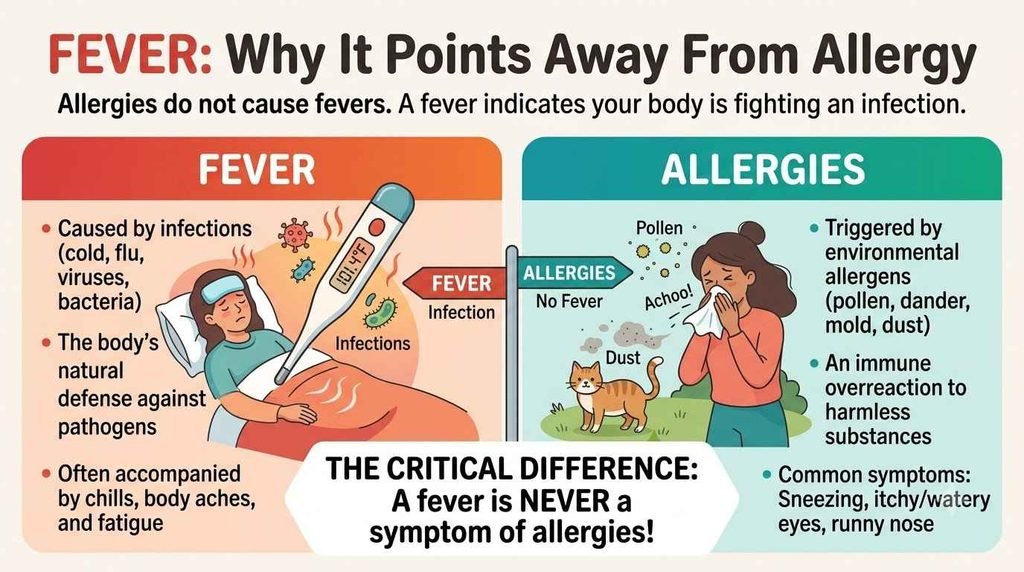
Fever: Why It Points Away From Allergy
Fever is the second big clue. It is your body’s reaction to infection. Fall allergies are an immune reaction to a trigger, not an infection, so they do not cause fever.
What a Fever Suggests
If you have a fever, think about:
- A cold, which may cause a mild, brief fever
- Flu, which often causes a sudden, higher fever with chills and strong body aches
- COVID-19, which can cause fever, cough, and other symptoms
- Strep throat or a sinus or ear infection
When to Call a Doctor About Fever
- A fever that lasts more than three days
- A fever that goes away and then returns
- A very high fever, or one that does not respond to fever medicine
- Fever with a stiff neck, severe headache, confusion, or a new rash
- Any fever in a baby younger than three months
Take your temperature with a thermometer. It is a faster and more reliable test than guessing.
Fall Allergies vs Cold, Flu, and COVID-19
Fall is also cold and flu season, so mix-ups are common. This table can help, but it is a guide, not a diagnosis.
| Feature | Fall Allergies | Cold | Flu | COVID-19 |
|---|---|---|---|---|
| Itchy eyes and nose | Common | Rare | Rare | Rare |
| Fever | No | Mild, sometimes | Common, often high | Common, not always |
| Body aches | No | Mild | Strong | Common |
| Mucus | Thin and clear | Clear, then thicker | Variable | Variable |
| Onset | Fast after exposure | Gradual | Sudden | Variable |
| Contagious | No | Yes | Yes | Yes |
| Duration | Weeks, while exposed | About a week, up to 10 days | About 1 to 2 weeks | Varies |
A person can have both allergy and an infection at the same time, which makes the picture messier. If you are unsure, a doctor or a simple test can sort it out.
When Antivirals Matter
This is where many people get confused, so let’s be clear. Antivirals do not treat fall allergies, and they do not treat the common cold.
What Antivirals Are For
According to the CDC, flu antivirals are prescription medicines that work only against influenza. They can reduce symptoms and shorten the illness. They work best when started within one to two days of the first symptoms. COVID-19 antivirals are different and are not approved for flu. Antibiotics do not treat flu either.
Who Should Think About Antivirals
Treatment is recommended for people who are hospitalized with flu, people who are very sick with flu, and people at higher risk of complications. Higher-risk groups include:
- Pregnant women
- People with asthma or chronic lung disease
- People with diabetes
- People with heart disease
- Others at risk because of age or health conditions
If you are in one of these groups and suddenly develop fever, chills, strong body aches, and cough, contact your doctor promptly. Do not assume it is “just allergies.”
What Antivirals Cannot Do
- They do not stop sneezing, itching, or a runny nose from allergy.
- They do not cure a cold.
- They are not a replacement for the annual flu vaccine.
- They require a clinician’s advice. Do not take leftover or borrowed medicine.
Fall Allergies and Asthma
For some people, fall allergies do more than irritate the nose. Pollen can inflame and tighten the airways, causing cough, wheezing, and shortness of breath.
Asthma problems often rise in September. This is the same time that ragweed pollen peaks and children return to school, and experts often call it the September asthma peak.
If you have asthma:
- Review your asthma action plan with your doctor before ragweed season.
- Keep taking daily controller medicine as prescribed.
- Carry your quick-relief inhaler.
- Seek emergency care if you cannot breathe or your inhaler does not help.
Foods That Can Bother You in Fall
Some people with ragweed allergy get an itchy mouth after eating certain raw foods. This is called oral allergy syndrome, or pollen-food allergy syndrome. Proteins in the food look similar to ragweed pollen, so the immune system reacts.
Allergy groups list several foods related to ragweed that may cause this reaction, including:
- Bananas
- Melons such as watermelon, cantaloupe, and honeydew
- Cucumber
- Zucchini
- Mango
- Artichoke
- Sunflower seeds
- Chamomile tea and echinacea
Symptoms are usually mild and stay in the mouth and throat. Cooking or peeling the food may help. Swelling of the throat or trouble breathing needs emergency care.
How Fall Allergies Are Diagnosed
If your symptoms repeat every year and disrupt your life, ask a doctor or allergist about testing. The process is simple, and a plain-language overview of hay fever, its symptoms, and how it is diagnosed can help you prepare.
Step 1: Your History
The doctor will ask when symptoms begin, how long they last, what makes them worse, and whether you have asthma, eczema, or food reactions. A symptom diary with dates, symptoms, and weather notes helps a lot.
Step 2: Exam
The doctor may check your nose, eyes, throat, ears, and lungs.
Step 3: Skin Prick Test
A small amount of diluted allergen is placed on the skin. If you are allergic, a small itchy bump appears within about 15 minutes. It looks worse than it feels.
Step 4: Blood Test
If skin testing is not possible, a blood test can measure allergy antibodies. Results take longer but can be just as helpful.
Do not stop any medicine before testing unless your doctor says so. Some antihistamines can affect skin test results.
Treatment Options for Fall Allergies
There is no cure for fall allergies, but good treatments exist. The best plan depends on how severe your symptoms are.
Antihistamines
These block histamine and ease sneezing, itching, and runny nose. Newer non-drowsy types are available without a prescription. Older types can cause sleepiness, so be careful when driving.
Nasal Steroid Sprays
These calm swelling inside the nose. They work best when used every day, not only on bad days. Full effect may take several days.
Decongestants
Decongestants can relieve a stuffy nose but have limits. Nasal sprays should not be used for more than a few days, because they can cause rebound stuffiness. People with high blood pressure, heart disease, glaucoma, or prostate problems should ask a doctor first.
Eye Drops and Saline Rinses
Antihistamine eye drops can calm itchy eyes. Saline rinses wash pollen and mucus out of the nose. Use distilled, boiled and cooled, or properly filtered water, and clean the device after each use.
Immunotherapy
For severe or long-lasting symptoms, immunotherapy trains the immune system to tolerate the allergen.
- Allergy shots. Small, increasing amounts of allergen are given over time. They are considered one of the most effective treatments for pollen allergy.
- Under-the-tongue tablets. A daily tablet is available for ragweed and is usually started well before the season. Your allergist will explain safety rules.
Ask an allergist whether immunotherapy fits your health and schedule.
About Natural Remedies
Evidence level matters. Saline rinses have good support. Claims about honey, herbal teas, and supplements are usually based on weak research. Some herbal products, such as chamomile and echinacea, are related to ragweed and may cause reactions. Check with a clinician before using supplements, especially if you are pregnant or take other medicines.
Children, Pregnancy, and Older Adults
Medicine choices differ for children, pregnant adults, and older adults. Do not guess. Ask a pediatrician, doctor, or pharmacist before starting any product.
Home and Yard Tips to Reduce Fall Allergies
You cannot control the wind, but you can control your space.
At Home
- Keep windows and doors closed on high-pollen days.
- Run air conditioning or a fan with a clean filter.
- Use a HEPA filter in the bedroom.
- Shower before bed and wash your hair.
- Change clothes when you come inside.
- Dry laundry indoors, not on an outdoor line.
- Wash bedding weekly in hot water.
- Vacuum and damp-dust often.
- Run bathroom fans and fix leaks to prevent mold.
- Clean vents and replace furnace filters before turning on the heat.
- Keep pets out of the bedroom and wipe them after they come in.
In the Yard
- Rake leaves early, before they get wet and moldy.
- Wear a pollen-filtering mask and glasses.
- Take medicine before yard work, if your doctor agrees.
- Ask someone else to do the raking if you can.
- Shower and change clothes afterward.
In the Car and at Work
- Keep car windows closed and use recirculated air.
- Replace the cabin air filter on schedule.
- Keep a spare jacket at work if you commute outdoors.
- Keep a small air purifier at your desk if allowed.
Check Pollen Counts
Local pollen counts and air quality alerts are easy to find. Many weather apps include a forecast. Plan outdoor time for when counts are lower, such as the afternoon or after rain, though mold can rise after rain.
When to See a Doctor or Seek Urgent Care
Most fall allergies can be managed at home. Some signs call for help.
Call a Doctor If
- Symptoms last for weeks and over-the-counter medicine is not enough
- Symptoms disturb your sleep, work, or school
- You have thick colored mucus with facial pain for more than a week
- You have asthma and notice more wheezing or coughing
- You have a fever, chills, or body aches along with cold-like symptoms
- You think you may have flu or COVID-19, especially if you are at higher risk
Seek Emergency Care If
- You have trouble breathing, or wheezing that does not ease with a rescue inhaler
- Your lips, tongue, or throat swell
- You have chest pain, confusion, or blue lips
- You have hives together with dizziness or faintness
Real-Life Examples
The October sneezer. Maya sneezes every September and October. Her eyes itch, her nose runs clear, and she has no fever. It has happened for three years in a row. The pattern points to fall allergies.
The leaf raker. Daniel feels fine until he rakes the yard. Within an hour, his nose is blocked and his eyes burn. Wet leaves and mold are likely triggers.
The sudden crash. Priya wakes up with fever, chills, and strong aches. This looks like flu, not allergy. Since she has asthma, she should call her doctor promptly.
Allergy in Children
Children get hay fever too, and they may not describe it well. Watch for frequent nose rubbing, mouth breathing, snoring, dark circles under the eyes, and a nighttime cough. Many children have a “cold” every September that is really allergy.
Back-to-school brings extra germs, so a child can have allergy and a cold at once. A child with a fever is likely fighting an infection. Ask a pediatrician before giving any allergy or cold medicine, because many products are not safe for young children.
How Allergy Affects Sleep, Work, and Mood
Allergy is not just a nose problem. A blocked nose makes it hard to breathe at night, so you may snore, wake often, and feel tired the next day. Poor sleep then leads to brain fog, short temper, and trouble focusing at work or school.
Allergy swelling can also cause headaches and ear pressure. If your symptoms are affecting your sleep or mood, tell your doctor. This is a real health issue, and treating it can improve your whole day.
Is the Allergy Season Getting Longer?
Research suggests that warmer temperatures and higher carbon dioxide levels can lengthen pollen seasons and increase pollen output in some regions. A late first frost, for example, gives ragweed more time to release pollen. This means you may notice a longer season than your parents did. We cannot predict exactly how your local season will change, but tracking it yearly helps you prepare.
Questions to Ask Your Allergist
A visit goes better when you come prepared. Consider asking:
- Which triggers am I reacting to, and how do I know?
- When should I start medicine before next season?
- Which medicine is safest for me, given my other health conditions?
- Do I need an asthma action plan or an updated one?
- Am I a candidate for allergy shots or tablets?
- Which symptoms mean I should call you right away?
Bring your symptom diary, a list of all medicines and supplements you take, and any photos of rashes or swelling. The more detail you share, the better your plan will be.
Common Mistakes to Avoid
- Waiting until symptoms are severe. Medicine works better when started early.
- Using nasal decongestant spray for too long. It can make stuffiness worse.
- Drying laundry outside. Pollen sticks to sheets and towels.
- Opening windows on dry, breezy mornings. This is when pollen is often highest.
- Treating it like a cold. Cold medicine will not fix an allergy.
- Ignoring a cough with wheezing. This may be asthma.
- Blaming the wrong plant. Goldenrod blooms at the same time as ragweed, but its pollen is heavy and sticky and is carried by insects. Ragweed is the usual culprit.
Common Myths About Autumn Allergy
- Myth: Allergies only happen in spring. Fall is a major season for allergy in many places.
- Myth: Cold weather ends allergies. A first frost helps with ragweed, but mold and dust mites can continue.
- Myth: You cannot develop allergies as an adult. Allergy can start at any age.
- Myth: Allergies cause fever. They do not. A fever points to infection.
- Myth: Antivirals help allergies. They do not. They are for flu and some COVID-19 cases.
A Simple Five-Question Test
Not sure what you have? Ask yourself:
- Do my eyes and nose itch? If yes, think allergy.
- Do I have a fever or body aches? If yes, think infection.
- Did it start suddenly after contact with someone sick? If yes, think cold, flu, or COVID-19.
- Does it return around the same time every year? If yes, think seasonal allergy.
- Has it lasted more than two weeks? If yes, think allergy or sinus trouble and see a doctor.
This test is a guide, not a diagnosis.
A Simple Seven-Day Reset Plan
If your symptoms are flaring right now, try this plan, and adjust it with your doctor’s advice.
- Day 1. Start a symptom diary. Check the pollen forecast each morning.
- Day 2. Wash bedding in hot water. Replace the furnace or air filter.
- Day 3. Start a daily saline rinse. Ask a pharmacist which allergy medicine suits you.
- Day 4. Vacuum with a HEPA filter and damp-dust surfaces.
- Day 5. Plan outdoor time for later in the day. Shower before bed.
- Day 6. Clean bathroom and basement areas where mold can grow.
- Day 7. Review your diary. If symptoms are still hard to control, book a visit with a doctor or allergist.
Frequently Asked Questions
Are fall allergies a thing?
Yes. Fall allergies are real and common. Ragweed pollen, mold, and dust mites are the main triggers. Many people think allergies only happen in spring, which is why fall symptoms are often blamed on a cold.
What causes fall allergies?
The most common cause is ragweed pollen. Mold, other weed pollens, dust mites, and pet dander also play a part. Weather and habits, such as raking leaves, can make symptoms worse.
When do fall allergies start?
Ragweed usually starts in early to mid-August, peaks in mid-September in many areas, and ends by early November or after a hard frost. Mold and dust mites can keep fall allergies going longer.
What are the main fall allergies symptoms?
Sneezing, runny or blocked nose, itchy eyes and throat, postnasal drip, cough, and tiredness. Fever and strong body aches are not typical and suggest infection.
Are there fall allergies without ragweed?
Yes. Even if you do not react to ragweed, you can have fall allergies from mold, dust mites, pet dander, or other weed pollens.
Do antivirals help fall allergies?
No. Antivirals treat flu and some COVID-19 cases, not allergies or colds. Antihistamines, nasal sprays, and trigger control are the usual tools for allergy.
Conclusion
Fall allergies are real, common, and easy to mistake for a cold. Itch, clear mucus, no fever, and a pattern that returns each year point to allergy. Fever, aches, and a sudden start point to infection, and that is when antivirals matter, especially for flu in higher-risk people.
Use the timeline to plan ahead, start medicine early if your doctor agrees, and cut your exposure at home and in the yard. Learn the warning signs, and call a doctor if something does not feel right. With a little preparation, you can enjoy the season instead of dreading it.