


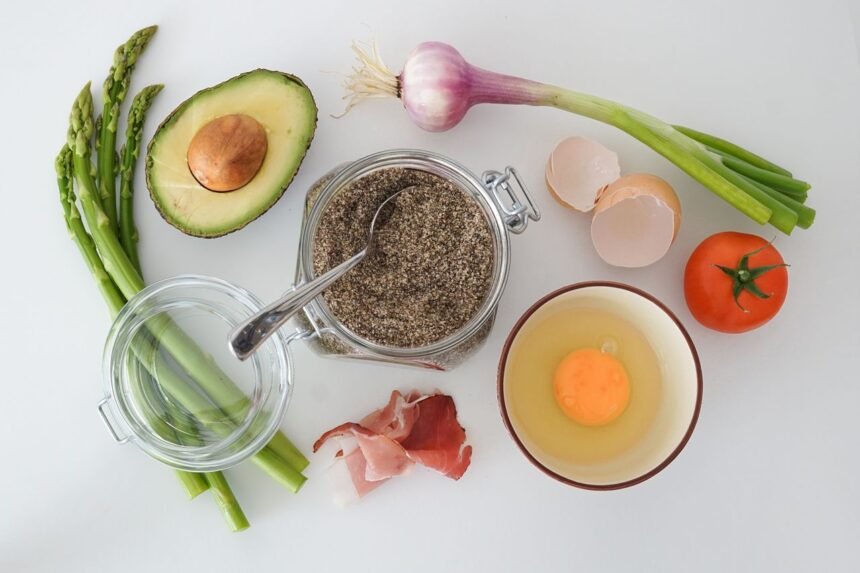
Curious about a low FODMAP way of eating? This friendly article explains the basics of the FODMAP diet, shows which foods, vegetables, fruits and snacks are usually easier on a sensitive gut, and answers common questions like “is peanut butter low FODMAP?” You will find simple breakfast ideas, easy recipes, a safe snack list, and practical ways to manage gut sensitivity day to day.
We also explain the three phases of the plan, why portion size matters, and when to talk with a doctor or dietitian. Every section uses plain language, short paragraphs and clear tables, so you can scan and act quickly.
The advice follows E-E-A-T principles and treats this as a YMYL topic, so claims stay careful and honest. This content is educational only and is not medical advice, so please check with a healthcare professional before changing your diet, especially if you have ongoing digestive symptoms.
Introduction: When Food Feels Like the Enemy
Bloating after lunch. Gas that shows up at the worst times. Stomach cramps that make you cancel plans. If this sounds familiar, you are far from alone, and a low FODMAP plan may be something you have heard about.
The idea is simple. Certain carbohydrates ferment in your gut and can trigger symptoms in sensitive people. By reducing them for a short time, many people with irritable bowel syndrome (IBS) find that their symptoms ease.
This article keeps things practical and calm. You will learn the basics, see easy food lists, and get ideas for breakfasts, snacks and recipes. By the end, you will know how to start safely and what questions to bring to a professional.
About This Article: E-E-A-T and YMYL
This article follows E-E-A-T, which means experience, expertise, authoritativeness and trustworthiness. It is built on widely accepted nutrition information and on the research tradition that created the FODMAP approach at Monash University in Australia. We avoid miracle claims and we say clearly when something depends on the person.
Digestive health is a YMYL topic, or “Your Money or Your Life,” because mistakes can affect your wellbeing. So we encourage you to confirm details with trusted sources, such as Monash FODMAP, which publishes the science and a food-testing app. You can also read a plain-English overview on Healthline’s low FODMAP page.
Support from other people can help too. Groups such as the IBS Patient Support Group share experiences and tips. Treat peer advice as helpful, not as medical guidance, and talk with your own healthcare team.
The Basics of the FODMAP Diet
FODMAP is short for Fermentable Oligosaccharides, Disaccharides, Monosaccharides And Polyols. That is a mouthful, so think of it as a group of short-chain carbohydrates and sugar alcohols. They are found in many everyday foods.
These carbohydrates are not fully absorbed in the small intestine. They travel on to the large intestine, where gut bacteria ferment them, and they also draw in extra water. The result can be gas, bloating, pain and changes in bathroom habits.
A low FODMAP diet limits these foods for a short period, then brings them back in a planned way. It is not meant to be a forever diet. The goal is to learn which foods bother you, and which do not.
Who Might Benefit from a Low FODMAP Diet?
The approach was developed mainly for people with irritable bowel syndrome. Research suggests that a good share of people with IBS notice improvement, though not everyone does. It is not a cure, and results vary from person to person.
Some people with other digestive conditions are also told to try it, but only under professional guidance. Symptoms like these can have many causes, including celiac disease, inflammatory bowel disease and food allergies. So it is important to get a proper diagnosis first.
If you have not seen a doctor about your symptoms, start there. A low FODMAP plan can hide signs of other conditions or delay needed treatment. A professional can rule out red flags and help you decide whether this plan makes sense.
The Three Phases of the Plan
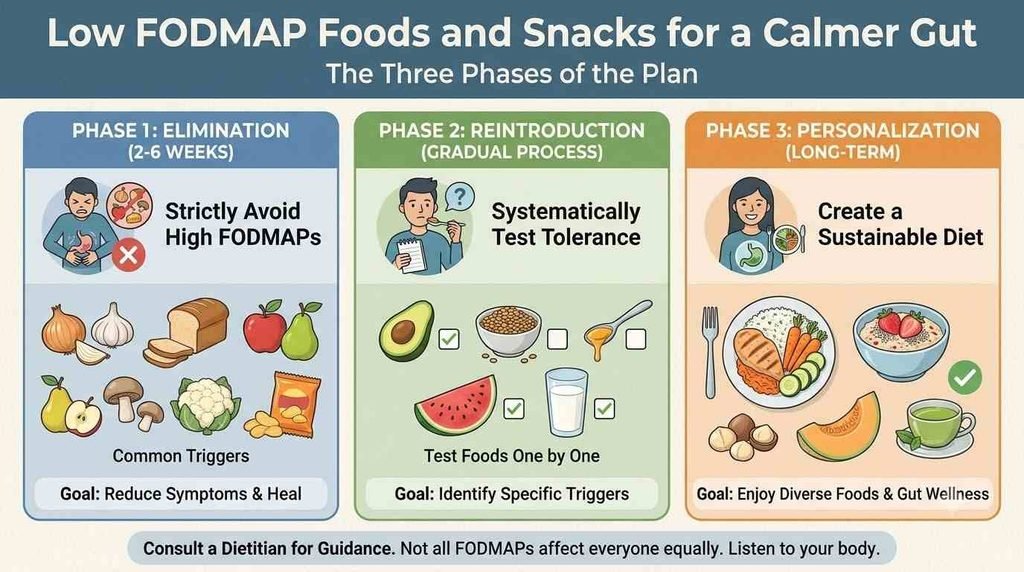
A proper low FODMAP approach has three phases. Many people mistakenly stay in the first phase for too long. That can make eating unnecessarily restrictive.
Phase one is elimination, where you swap high FODMAP foods for lower ones, usually for about two to six weeks. Phase two is reintroduction, where you test each FODMAP group one at a time. Phase three is personalization, where you build a long-term way of eating that fits your own triggers.
Think of it like detective work. First you clear the scene, then you test suspects, and finally you decide who is really guilty. A registered dietitian who knows this method can make the process much smoother.
Table 1: The Three Phases at a Glance
| Phase | Typical Length | Main Goal | What You Do |
|---|---|---|---|
| 1. Elimination | About 2–6 weeks | Calm symptoms | Swap high FODMAP foods for low ones |
| 2. Reintroduction | About 6–8 weeks | Find your triggers | Test one FODMAP group at a time |
| 3. Personalization | Long term | Eat as freely as possible | Keep only the foods that truly bother you |
| Check-ins | As needed | Stay safe and balanced | Review progress with a dietitian |
The Elimination Phase Explained
During elimination, you choose foods from the lower FODMAP list and avoid the high ones. This does not mean cutting out entire food groups. Most people can still eat grains, proteins, vegetables, fruit and dairy alternatives.
Portion size matters a lot. A food can be fine in a small serving and troublesome in a large one, because FODMAPs add up across a meal. That is why a food app or a list with serving sizes is so useful.
Keep this phase short. If your symptoms do not improve after a few weeks, do not just stay on the plan forever. Speak with your doctor or dietitian, because something else may be going on.
The Reintroduction Phase Explained
Once your symptoms settle, you slowly bring FODMAP groups back, one at a time. For example, you might test lactose on one day and fructans on another. You eat a small amount, then a larger amount, and you note how you feel.
Keep a simple diary during this phase. Write down what you ate, the portion, and any symptoms. Wait a few days between tests, so you can tell what caused what.
The point is to discover your personal limits. Many people find that they tolerate several FODMAP groups quite well. Only a few foods may need to be limited long term.
The Personalization Phase Explained
In the final phase, you build your own routine. You include everything you tolerate, and you limit only the foods that cause problems. This protects your gut bacteria, your nutrition and your enjoyment of food.
Remember that tolerance can change over time. Stress, sleep, hormones and illness can all affect how your gut feels. A food that bothered you last month may be fine later.
Retest foods now and then, preferably with professional support. Staying flexible helps prevent fear of food. The healthiest diet is the widest one that your body can comfortably handle.
The Five Main FODMAP Groups
It helps to know the groups, so you can spot them on labels. Fructans and galacto-oligosaccharides, or GOS, are the oligosaccharides. Lactose is the disaccharide. Excess fructose is the monosaccharide, and polyols include sorbitol and mannitol.
Different people react to different groups. One person may struggle with onions and garlic, while another reacts mostly to milk. That is why reintroduction is so valuable.
Reading about each group will make your shopping easier. You will begin to notice hidden sources, like inulin in snack bars or sorbitol in sugar-free gum. Knowledge gives you control.
Table 2: FODMAP Groups and Common Sources
| Group | Type | Common High FODMAP Sources | Easier Swap Ideas |
|---|---|---|---|
| Fructans | Oligosaccharide | Wheat, onion, garlic, rye | Rice, oats, garlic-infused oil |
| GOS | Oligosaccharide | Chickpeas, lentils, kidney beans | Small servings of canned lentils, tofu |
| Lactose | Disaccharide | Milk, soft cheese, regular yogurt | Lactose-free milk, hard cheese |
| Excess fructose | Monosaccharide | Honey, apples, mango, high-fructose syrup | Maple syrup, strawberries, oranges |
| Polyols | Sugar alcohols | Mushrooms, cauliflower, sugar-free gum | Carrots, spinach, regular sweets in moderation |
Low FODMAP Foods You Can Enjoy
Good news first: there are many delicious low FODMAP foods. You do not have to live on plain rice and chicken. With a little planning, meals can stay colorful and satisfying.
For proteins, eggs, plain chicken, turkey, fish, seafood, firm tofu and tempeh are usually fine. For grains, rice, oats in measured portions, quinoa, polenta and gluten-free bread are common choices. Some sourdough spelt breads are also tolerated by many people, thanks to the way they are made.
For fats and flavor, olive oil, butter in small amounts, hard cheeses, fresh herbs, ginger, lemon, chives and the green tops of spring onions are helpful. Garlic-infused oil adds flavor because the problem carbohydrates in garlic do not dissolve into oil. Always check the label, since some products contain actual garlic pieces.
Low FODMAP Vegetables
Low FODMAP vegetables are plentiful. Carrots, cucumbers, zucchini, spinach, lettuce, tomatoes, bell peppers, potatoes, green beans, bok choy and kale are popular choices. Pumpkin, eggplant and parsnips can also work in the right portions.
Some vegetables are only low in small servings. For example, a little sweet potato or broccoli head may be fine, but a big plate may not be. This is where serving sizes in an official app or list become helpful.
High FODMAP vegetables include onions, garlic, cauliflower, mushrooms, asparagus and artichokes. You do not need to avoid them forever. You only need to avoid them during elimination, then test them later.
Low FODMAP Fruits
Fruit confuses many beginners, because some fruits are high in fructose and polyols. But there are plenty of low FODMAP fruits to enjoy. Strawberries, blueberries, oranges, mandarins, kiwi, grapes, pineapple and cantaloupe are common examples.
Bananas are interesting. A firm, slightly unripe banana is usually lower in FODMAPs than a very ripe one. Ripeness changes the sugar profile, so choose accordingly.
Fruits that are commonly higher in FODMAPs include apples, pears, mangoes, watermelon, peaches and cherries. Dried fruit and fruit juice can also be concentrated sources. Keep portions modest, and spread fruit across the day.
Table 3: Easy Swaps for Vegetables and Fruits
| Instead of This (Higher FODMAP) | Try This (Lower FODMAP) | Why It Helps |
|---|---|---|
| Onion | Green tops of spring onions, chives | Gives flavor without the fructans |
| Garlic cloves | Garlic-infused oil | Flavor stays, fructans stay out |
| Cauliflower | Carrots or green beans | Lower in polyols |
| Mushrooms | Zucchini or eggplant slices | Gentler on many guts |
| Apple | Orange or kiwi | Less excess fructose |
| Mango | Pineapple or strawberries | Lower in fructose |
| Watermelon | Cantaloupe in a modest serving | Better tolerated by many |
| Ripe banana | Firm, slightly unripe banana | Lower sugar load |
Is Peanut Butter Low FODMAP?
This is one of the most searched questions. So, is peanut butter low FODMAP? In general, plain peanut butter made from peanuts is considered low FODMAP in a modest serving, often around two tablespoons.
The catch is the ingredient list. Some peanut butters contain added honey, high-fructose syrup, inulin or other ingredients that raise the FODMAP load. Choose a simple jar with peanuts and maybe a little salt.
Portion size still matters, and so does your own tolerance. Peanuts are legumes, not true nuts, and some people react to them for other reasons, like allergy. If you are unsure, check the Monash app and test your own response.
Low FODMAP Snacks and a Safe Snack Ideas List
Snacks are where many people get stuck. The good news is that low FODMAP snacks can be simple and tasty. The key is to keep portions sensible and to read labels.
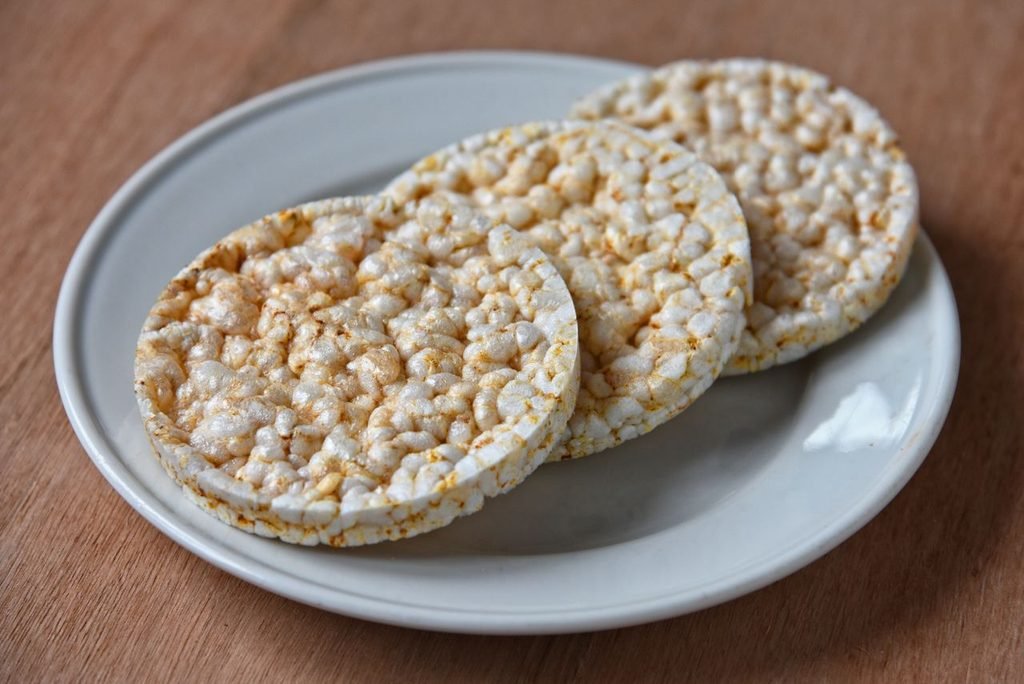
Try a small handful of walnuts or about ten almonds. Rice cakes with peanut butter are easy and filling. A firm banana, a cup of strawberries or a few grapes work well when you need something fresh.
Other ideas include lactose-free yogurt, hard cheese with gluten-free crackers, plain popcorn, boiled eggs, olives, and dark chocolate in small amounts. Pack snacks ahead of time, because planning prevents poor choices when you are hungry.
Table 4: Safe Snack Ideas List
| Snack | Typical Serving Idea | Notes |
|---|---|---|
| Rice cakes with peanut butter | 1–2 cakes, about 1–2 tbsp spread | Check the spread for added honey |
| Firm banana | 1 small | Choose firm, not overripe |
| Strawberries | About 1 cup | Easy and refreshing |
| Walnuts | A small handful | Good fat and crunch |
| Almonds | About 10 nuts | Larger portions may bother some people |
| Lactose-free yogurt | Small tub | Check label for added sweeteners |
| Hard cheese and gluten-free crackers | 1–2 slices cheese | Cheddar and parmesan are often tolerated |
| Plain popcorn | A moderate bowl | Avoid garlic or onion seasoning |
| Boiled egg | 1–2 eggs | Protein-rich and portable |
| Dark chocolate | 1–2 small squares | Choose plain, without added inulin |
Low FODMAP Breakfast Ideas
A good low FODMAP breakfast sets you up for the day. Many people start with oats. A bowl of rolled oats cooked with lactose-free milk or water, topped with blueberries and a teaspoon of maple syrup, is a classic.
Eggs are another favorite. Scrambled eggs with spinach and tomatoes, served with gluten-free toast, are quick and satisfying. A veggie omelet with zucchini and bell pepper adds color and fiber.
For something faster, try lactose-free yogurt with strawberries and a few walnuts. Or make a smoothie from a firm banana, spinach, lactose-free milk and a spoon of peanut butter. These ideas are simple and flexible.
Low FODMAP Recipes That Are Easy to Make
You do not need advanced cooking skills to enjoy low FODMAP recipes. Start with simple meals built from safe ingredients. Use herbs, lemon, ginger and infused oils for flavor.
Try a sheet-pan dinner of salmon, baby potatoes and green beans, drizzled with olive oil and lemon. Or make a chicken and rice bowl with carrots, cucumber and a sesame-ginger dressing. Make sure the dressing has no garlic or onion powder.
For a cozy option, simmer a tomato and basil soup with garlic-infused oil and serve it with gluten-free bread. Zucchini and egg muffins are another easy recipe, and they are great for meal prep. Cook once, eat twice, and save time.
A Simple Three-Day Low FODMAP Meal Plan
Day one: oats with blueberries for breakfast. Lunch could be a chicken and rice bowl with cucumber and carrots. Dinner might be baked salmon with potatoes and green beans.
Day two: scrambled eggs with spinach and gluten-free toast. Have a quinoa salad with tomatoes, olives and feta for lunch. For dinner, try a stir-fry with firm tofu, bok choy and rice, flavored with ginger and garlic-infused oil.
Day three: lactose-free yogurt with strawberries and walnuts. Lunch could be a turkey and lettuce wrap in a gluten-free tortilla. Dinner might be zucchini noodles with a simple tomato sauce and grilled chicken.
Treat this plan as inspiration, not a prescription. Adjust it for allergies, calories and personal preferences. If you have special needs, ask a dietitian to tailor it.
How to Read Labels for Hidden FODMAPs
Packaged foods can hide FODMAPs in surprising places. Look out for onion powder, garlic powder, inulin, chicory root, honey, high-fructose corn syrup, agave and sugar alcohols such as sorbitol and mannitol. They can show up in sauces, snack bars, soups and “sugar-free” products.
Also watch for vague terms like “natural flavors” or “spices,” which may include onion or garlic. When possible, choose products with short, clear ingredient lists. Brands that label their items as low FODMAP can be convenient, but always verify.
If a label is confusing, skip the product or search it in a trusted database. Cooking simple meals at home gives you the most control. Over time, label reading becomes a fast habit.
Eating Out and Traveling on a Low FODMAP Plan
Restaurants can feel tricky, because sauces and stocks often contain onion and garlic. Look for simple dishes, such as grilled meat or fish with rice and plain vegetables. Ask for sauces on the side.
It is fine to ask politely about ingredients. Many kitchens are happy to help, especially if you say you have a digestive condition. Keep your request short and friendly.
When traveling, pack a few safe snacks, such as rice cakes, nuts and fruit. Look up menus before you go, if possible. A little preparation keeps trips more relaxed.
How to Manage Gut Sensitivity Beyond Food
Food is only one piece of the puzzle. Your gut and brain talk constantly through what is sometimes called the gut-brain axis. Stress, anxiety and poor sleep can all make symptoms worse, even when your meals are perfect.
Simple habits can help. Eat regular meals, chew slowly and avoid very large portions. Stay hydrated, and limit things that irritate many guts, like heavy alcohol and very greasy meals.
Gentle exercise, such as walking, can support digestion and mood. Techniques like deep breathing, mindfulness or yoga may help calm the nervous system. Small daily practices add up to real relief.
Stress, Sleep and Your Gut
Stress can speed up or slow down your digestion. Many people notice that cramping increases during busy or anxious times. That does not mean the problem is “in your head,” because stress effects on the gut are real and measurable.
Try to protect your sleep, since poor sleep is linked with more gut discomfort for many people. Keep a regular bedtime, limit screens late at night and avoid heavy meals right before bed. Even small improvements can matter.
If anxiety or low mood is part of the picture, speak to a professional. Therapies like gut-directed hypnotherapy and cognitive behavioral therapy have been studied for IBS, and some people find them helpful. Support for your mind can support your gut.
Fiber, Fluids and Gentle Helpers
Fiber can help or hurt, depending on the type. Soluble fiber, found in oats, chia seeds and psyllium, is often better tolerated than very rough, insoluble fiber. Increase it slowly, and drink plenty of water.
Some people find peppermint oil capsules helpful for cramping, and this has been studied in IBS. Others sip ginger or peppermint tea. These are not for everyone, so check with your doctor, especially if you have reflux or take other medicines.
Heat packs can also soothe abdominal cramps. Warm baths and rest are underrated tools. Keep a note of what helps you, so you can repeat it.
Keeping a Food and Symptom Diary
A diary is one of the most useful tools you can use. Write down what you ate, the portion, the time and any symptoms. Add notes about stress, sleep and your cycle if relevant.
After a week or two, patterns often appear. You might notice that certain combinations or large portions are the real trigger. This information helps you and your dietitian make better decisions.
Use a notebook or a simple phone app, whichever you prefer. Keep it short, so you can stick with it. Consistency matters more than detail.
Common Mistakes to Avoid
The first mistake is staying in the elimination phase too long. This can reduce variety and may harm your gut bacteria. The second mistake is starting without a proper diagnosis.
The third mistake is cutting out whole food groups, like all grains or all fruit. A low FODMAP plan should still be balanced. The fourth mistake is ignoring portion size, which is a key part of the method.
Another mistake is relying on processed “free-from” foods. They may be low in FODMAPs but high in sugar or fat. Whole foods are usually the better foundation.
Who Should Be Extra Careful
Some people should not follow a restrictive diet without professional help. This includes children, pregnant or breastfeeding women, older adults with poor appetite and anyone with a history of disordered eating. Restricting foods can be risky in these situations.
If you have a history of an eating disorder, or if food rules make you anxious, speak with a doctor or mental health professional before trying this approach. Your wellbeing is more important than any diet. Support is available.
People with diabetes, kidney disease or other medical conditions should also get personal advice. Diet changes can affect blood sugar, medicines and nutrition needs. A registered dietitian can help make a safe plan.

When to See a Doctor
Some symptoms need prompt medical attention. These include blood in the stool, black stools, unexplained weight loss, persistent vomiting, fever, severe or constant pain, trouble swallowing and symptoms that wake you at night. Do not try to treat these with diet alone.
Also see a doctor if your symptoms start after age 50, or if there is a family history of bowel cancer, celiac disease or inflammatory bowel disease. Early testing can find treatable problems. It is always better to be safe.
Ask about celiac testing before cutting out gluten, because the test can be unreliable once you stop eating it. Share your plans with your doctor, and ask for a referral to a registered dietitian. Good support makes the process safer and easier.
Low FODMAP Grains, Bread and Pasta
Grains are often the biggest worry for beginners. The good news is that many are fine. Rice, quinoa, polenta, oats and buckwheat are common low FODMAP staples.
Regular wheat bread and pasta are high in fructans, so most people swap them during elimination. Gluten-free bread and pasta are popular options, though you should check the label for inulin, honey or apple juice. Some traditionally made sourdough spelt breads are also tolerated in modest portions.
Remember that the issue is fructans, not gluten itself. That is why a gluten-free label does not automatically mean low FODMAP. Read the ingredients, and keep servings reasonable.
Low FODMAP Dairy and Dairy Alternatives
Lactose is a common trigger, but you do not have to give up dairy completely. Lactose-free milk, lactose-free yogurt and many hard cheeses, like cheddar and parmesan, are usually fine. Butter contains very little lactose, so small amounts are often tolerated.
Among plant-based drinks, lactose-free options and some almond, rice and soy drinks can work, depending on how they are made. For soy, versions made from soy protein tend to be lower in FODMAPs than those made from whole soybeans. Check labels for added sweeteners and thickeners.
If dairy is a major part of your diet, make sure you still get enough calcium. Fortified drinks, canned fish with bones and leafy greens can help. A dietitian can check that your low FODMAP plan meets your nutrient needs.
Low FODMAP Proteins and Plant-Based Eating
Most plain animal proteins are naturally free of FODMAPs. That includes chicken, turkey, beef, lamb, fish, shellfish and eggs. The trouble usually comes from marinades, sauces and seasoning blends that contain onion or garlic.
For vegetarians and vegans, the plan takes a bit more thought. Firm tofu, tempeh, eggs, quinoa, peanuts and small portions of canned, rinsed lentils or chickpeas can all help. Rinsing canned legumes reduces some of the water-soluble FODMAPs.
You can still eat well on a plant-based low FODMAP diet, but it works best with professional support. Protein, iron, zinc and vitamin B12 need extra attention. Do not try to manage this alone if you are already restricting other foods.
Drinks, Sweeteners and Treats
Drinks can hide FODMAPs too. Water, plain tea, coffee in moderation, and many herbal teas such as peppermint are usually fine. Fruit juices, sodas with high-fructose syrup and some herbal teas, like chamomile and fennel in strong brews, may bother sensitive people.
For sweeteners, table sugar and maple syrup are generally better tolerated than honey, agave or high-fructose syrups. Avoid sugar alcohols like sorbitol, mannitol and xylitol, which show up in sugar-free gum and candy. These are classic polyol triggers.
A small treat now and then is perfectly fine. Plain dark chocolate, a scoop of lactose-free ice cream or a homemade rice crispy square can fit a low FODMAP lifestyle. Enjoying food is part of long-term success.
Meal Prep and Shopping Tips
Planning ahead makes this way of eating far easier. Cook a big batch of rice or quinoa, roast a tray of carrots and potatoes, and prepare a few proteins. Store them in the fridge, and combine them in different ways during the week.
Keep a short staples list on your phone. Good items include eggs, oats, rice, potatoes, carrots, spinach, tomatoes, strawberries, lactose-free yogurt, olive oil, garlic-infused oil, firm tofu and plain peanut butter. With these, you can build many meals quickly.
Stock a few emergency snacks in your bag or desk, so you are never forced into a risky choice. Cook simple sauces from scratch, using herbs and spices you trust. A little preparation protects both your gut and your budget.
Eating on a Budget
A low FODMAP approach does not have to be expensive. Rice, oats, potatoes, eggs, carrots and seasonal fruit are inexpensive and naturally friendly. Specialty “free-from” products cost more and are often unnecessary.
Buy basics in bulk, and cook at home when you can. Frozen vegetables, like carrots, spinach and green beans, are cheap and last longer. Just check the bags for added sauces or onion and garlic.
Avoid paying extra for products that only add a low FODMAP label if you can make the same food at home. Simple recipes are often tastier and cheaper. Save your money for the items that truly help you.
Common Myths About the FODMAP Diet
The first myth is that it is a weight-loss diet. It is not, and it should not be used that way. It is a short-term tool for identifying symptom triggers.
The second myth is that everyone with a sensitive gut needs it. Many people feel better with simpler changes, like regular meals, less stress and more sleep. The third myth is that high FODMAP foods are unhealthy, when many are nutritious and good for gut bacteria.
Another myth is that you must avoid all FODMAPs forever. That could harm your gut microbiome over time. The aim is always to bring foods back, as much as your body allows.
Frequently Asked Questions
What does low FODMAP mean? It describes foods that are low in certain fermentable carbohydrates that can trigger gut symptoms in sensitive people.
Is a low FODMAP diet forever? No. It is meant to be a short elimination phase, followed by reintroduction and personalization.
Is peanut butter low FODMAP? Plain peanut butter made only from peanuts is generally considered low FODMAP in a small serving, but check for added honey or other ingredients.
What are some low FODMAP vegetables? Carrots, cucumber, zucchini, spinach, tomatoes, bell peppers, potatoes and green beans are common examples.
What are some low FODMAP fruits? Strawberries, blueberries, oranges, kiwi, grapes and pineapple are popular choices.
What is a good low FODMAP breakfast? Oats with blueberries, scrambled eggs with spinach, or lactose-free yogurt with strawberries are all easy options.
Do I need a dietitian? It is strongly recommended. A trained professional helps you avoid unnecessary restriction and nutrient gaps.
Conclusion: Start Gently and Stay Curious
A low FODMAP plan can be a helpful tool for people with sensitive guts. It works best as a short, structured experiment with three clear phases. The goal is not to restrict forever, but to learn what your body can handle.
Start with a proper diagnosis, and consider working with a registered dietitian. Use simple foods, small portions, and trusted resources like Monash FODMAP, the IBS Patient Support Group and Healthline. Keep a diary, and be patient with yourself.
Remember that gut health also depends on sleep, stress, movement and regular meals. Small steps add up. And if your symptoms are severe or unusual, please talk to a healthcare professional right away.
Disclaimer: This article is for educational purposes only and is not medical advice. Consult a qualified healthcare professional or registered dietitian before changing your diet.