


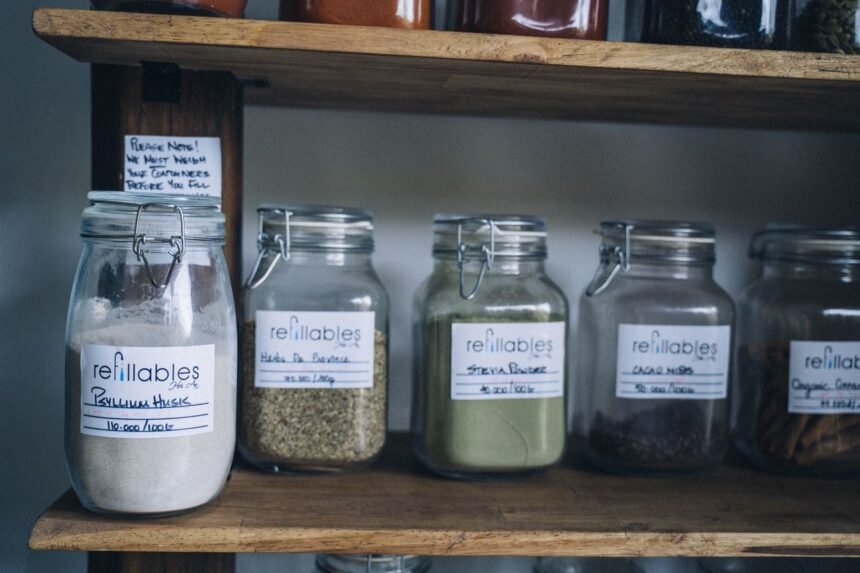
Wondering if psyllium husk is worth adding to your routine? This plain-language guide explains what is psyllium husk, what the research really says about cholesterol and gut health, and how much psyllium husk per day most adults use.
You will also learn how to take psyllium husk powder and psyllium husk capsules safely, which side effects to expect, and why the psyllium husk cancer warning on some labels is not what it seems. We use official sources from the NIH and FDA, label key limits clearly, and stay honest about what this fiber cannot do. Most of all, it is not a cure for any disease.
It is a helpful, low-cost fiber tool that works best alongside food, water, and your doctor’s advice. Read on for seven practical facts, four easy tables, and a short FAQ you can use today. Whether you want smoother digestion, a gentle cholesterol boost, or simply clearer answers, you will find them here.
Psyllium Husk: 7 Facts on Benefits, Dose, and Safety
Psyllium husk is one of the most talked-about fiber products right now. Estimated search volume sits near 301,000 with growth of about 82% year over year, according to this nutrition trend tracker (figures are estimates, not exact counts). People are curious because fiber is suddenly a hot topic, especially among adults using weight-loss medicines who often struggle with constipation.
This guide is written to be useful, not hyped. We lean on the NIH Office of Dietary Supplements, the digestive-health experts at NIDDK, and the FDA. Where evidence is strong, we say so, and where it is thin, we say that too.
Because this topic touches health, it is what search engines call a YMYL (Your Money or Your Life) subject. That means accuracy matters more than clicks. Every claim here is kept modest, and nothing in this article replaces advice from your own doctor, pharmacist, or dietitian.
How This Guide Follows E-E-A-T-A and YMYL Rules
We built this article around Experience, Expertise, Authoritativeness, Trustworthiness, and Accuracy. For experience, we focus on the practical side: how people actually mix, measure, and tolerate fiber supplements, as described on product labels and pharmacy guidance. We do not invent personal stories or fake testimonials.
For expertise and authority, the main facts come from government health agencies and published trials. The cholesterol numbers come from a large published review of clinical trials, and the daily fiber targets come from NIH. Trust comes from being open about limits, which is why you will see clear “not a cure” language throughout.
For accuracy, every number is tied to a source or labeled as an estimate. Supplement products vary by brand, so always check your own label. If anything here conflicts with what your clinician tells you, follow your clinician.
Fact 1: What Is Psyllium Husk?
So, what is psyllium husk? It is the outer coating of the seeds of a plant called Plantago ovata, which grows mostly in India. The husk is ground into a light, beige psyllium husk powder that is rich in a type of soluble fiber.
When this powder meets water, it swells and forms a thick gel. That gel is the reason it works in the gut and the reason it must always be taken with plenty of fluid. Dry or poorly mixed fiber can thicken fast, so mixing matters.
You will find it sold in many forms. These include loose powder, flavored drink mixes, wafers, and psyllium husk capsules. Each form delivers the same type of fiber, but the amount per serving differs a lot from brand to brand.
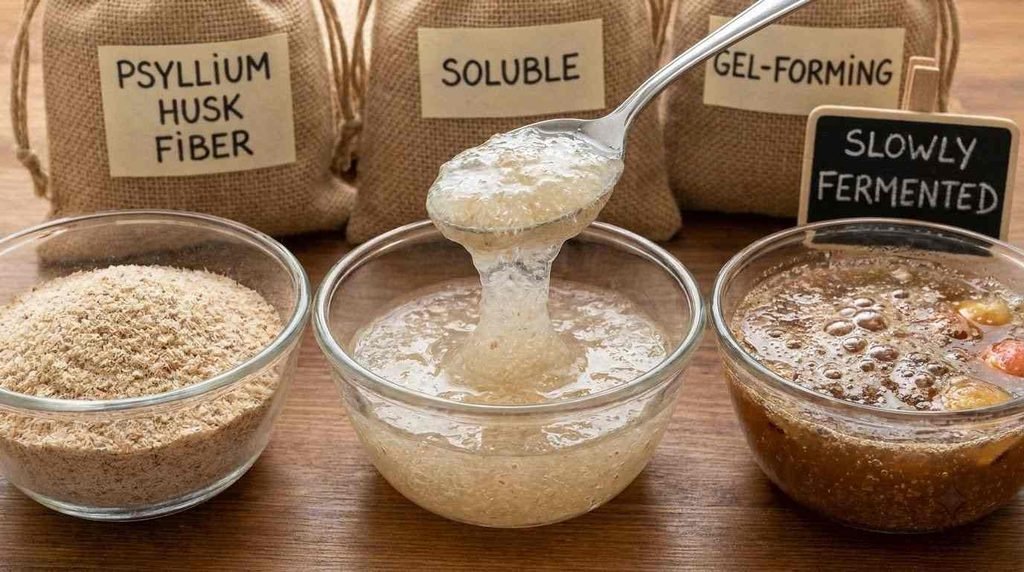
Psyllium Husk Fiber: Soluble, Gel-Forming, and Slowly Fermented
The term psyllium husk fiber describes a mostly soluble, viscous fiber. Soluble fiber dissolves or swells in water and slows digestion. This is different from insoluble fiber, such as wheat bran, which mainly adds bulk and speeds things along.
Psyllium is unusual because it is gel-forming but only slowly fermented by gut bacteria. In plain terms, it holds water in the stool without producing as much gas as some other fibers. That is one reason many people find it gentler than inulin or certain bean fibers.
This mix of bulk and softness is why it can help with both hard stools and loose stools. It acts as a regulator more than a stimulant. It does not force the bowel to move, so it does not tend to cause the cramping that stimulant laxatives can.
Psyllium Husk Supplement or Food? A Quick Reality Check
A psyllium husk supplement is a concentrated source of one fiber type. Whole foods such as oats, beans, lentils, berries, chia, and vegetables bring many fibers plus vitamins, minerals, and plant compounds. Food should always be the foundation.
The NIH Office of Dietary Supplements notes that most Americans do not meet daily fiber targets. A supplement can help close the gap, but it should not replace meals built around plants. Think of it as a support tool, not a main course.
The table below shows the adequate intake for fiber by age and sex. These are general targets for healthy adults, so your own needs may differ.
Table 1: Daily Fiber Targets for Adults (Adequate Intake)
| Group | Age | Fiber Target Per Day |
|---|---|---|
| Women | 19 to 50 | 25 grams |
| Women | 51 and older | 21 grams |
| Men | 19 to 50 | 38 grams |
| Men | 51 and older | 30 grams |
| Pregnancy | Any adult age | About 28 grams |
| Breastfeeding | Any adult age | About 29 grams |
These figures come from the dietary reference intakes discussed in the NIH fiber fact sheet for health professionals. Most adults eat roughly half of these amounts. That gap is why fiber products are so popular.
Fact 2: The Evidence for Gut Health and Constipation
Constipation is the best-known reason people reach for it. It is a bulk-forming fiber, which means it adds water and softness to stool. Softer, bulkier stool is usually easier and quicker to pass.
Pharmacy guidance describes it as an over-the-counter option for occasional constipation in adults and older children. Trials summarized in recent reviews suggest benefit when people take more than about 10 grams of fiber a day for at least four weeks. Smaller amounts of 10 grams or less did not show clear benefit in those same reviews.
Notice the time frame. Fiber is not an instant fix like a stimulant laxative. Most people need several days to notice a change, and a full trial period of a few weeks gives a fairer picture.
How Psyllium Husk Can Help Both Constipation and Loose Stools
It sounds odd, but this fiber can help when stools are too hard and when they are too loose. In constipation, the gel holds water in the stool and makes it softer. In loose stools, the same gel absorbs extra water and makes stool firmer.
This dual effect is why gastroenterology groups often mention soluble fiber for people with irritable bowel symptoms. The evidence is stronger for constipation-predominant symptoms than for other types. Your own response may vary.
The NIDDK explains that eating more fiber, drinking enough fluid, and staying active are first-line steps for constipation. You can read their plain-language advice in this constipation eating and nutrition guide. A fiber supplement fits neatly into that advice when food alone is not enough.
Fibermaxxing, GLP-1 Medicines, and Constipation
A popular social trend called fibermaxxing encourages people to eat more fiber. It overlaps with the rise of GLP-1 weight-loss and diabetes medicines, which slow digestion and often cause constipation. This is a big reason searches have climbed.
If you take one of these medicines, talk with your prescriber before adding any supplement. Slowed stomach emptying can make fiber feel heavy and bloating worse if you add it too fast. A food-first plan with a slow, careful increase is usually the safest start.
Fluid is the key piece here. People on these medicines sometimes drink less because they feel full or nauseated. Fiber without fluid can backfire, so build your water habit before you build your fiber dose.
Fact 3: The Evidence for Cholesterol
Cholesterol is the other big reason people use it. In the digestive tract, the gel binds some bile acids, which the liver then replaces by pulling cholesterol out of the blood. The result is a modest drop in LDL, often called “bad” cholesterol.
The strongest evidence comes from a 2018 meta-analysis in the American Journal of Clinical Nutrition by Jovanovski and colleagues. It pooled 28 trials with 1,924 people. About 10 grams of psyllium a day lowered LDL cholesterol by roughly 13 mg/dL, or 0.33 mmol/L.
That is a real effect, but it is a small one. For context, many prescription statins lower LDL far more. This is why it is best seen as an add-on to a heart-healthy diet, not as a replacement for medicine your doctor has prescribed.
What the FDA Allows Companies to Say About Psyllium Husk and Heart Health
The FDA permits a qualified heart-health claim for soluble fiber from psyllium seed husk. The claim says that, as part of a diet low in saturated fat and cholesterol, this fiber may reduce the risk of heart disease. The rule sits in the U.S. Code of Federal Regulations at 21 CFR 101.81.
Two details matter. First, the claim only applies when the product delivers enough soluble fiber per serving and per day. Second, the claim is tied to the whole diet, not to the supplement alone.
You can learn how the agency treats labels and supplement claims on the FDA website. The takeaway is simple. A label that says “may reduce the risk of heart disease” is a regulated, conditional statement, not a promise.

A Fair Look at the Limits of the Cholesterol Evidence
No single study tells the whole story. Most trials are short, often lasting 8 to 12 weeks. We have less proof about long-term heart attack or stroke outcomes from psyllium alone.
There is also a point about funding. Some psyllium studies include authors linked to companies that sell fiber products. That does not make the results wrong, but it is one more reason to read claims with a calm, critical eye.
If you have high cholesterol, the safest plan is a team effort. Combine food changes, activity, any medicine your doctor advises, and, if you wish, a daily fiber dose. Ask your clinician before changing anything, especially if you already take a statin.
Table 2: Evidence Snapshot for Psyllium Husk
| Claimed Benefit | What Studies Suggest | Strength of Evidence |
|---|---|---|
| Relief of occasional constipation | Softer, bulkier stool with regular use above about 10 g of fiber per day | Moderate to good |
| Lower LDL cholesterol | About 13 mg/dL drop at roughly 10 g per day in a large trial review | Moderate to good |
| Firmer loose stools | Gel absorbs extra water in some people | Limited to moderate |
| Fullness and weight control | Small or mixed results; not a weight-loss drug | Limited |
| Blood sugar support | Some small improvements after meals in studies | Limited to moderate |
| Cancer prevention | No solid human proof either way | Insufficient |
Read this table as a guide, not a guarantee. Individual results differ, and “moderate” does not mean “dramatic.” The honest summary is that it offers useful, modest benefits for gut and cholesterol goals.
Fact 4: How Much Psyllium Husk Per Day?
This is the question most readers want answered: how much psyllium husk per day is right? There is no single number for everyone. Product labels, research trials, and your own tolerance all play a part.
In trials for cholesterol, about 10 grams of psyllium a day is a common dose. Many labels suggest a smaller starting serving, often around 3 to 5 grams, taken up to three times daily. One well-known label tops out near 9 grams of psyllium a day, and another allows up to about 15 grams.
Those numbers can differ because brands measure “a serving” differently. A teaspoon of one product may hold 3 grams and another 5 grams. Always read your own label and measure carefully.
A Simple Start-Low, Go-Slow Plan
The safest approach is to start low and rise slowly over two to three weeks. This gives your gut time to adapt and lowers the chance of gas and bloating. Here is a simple pattern many pharmacists describe:
- Week 1: one small serving a day with a full glass of water.
- Week 2: if you feel fine, add a second small serving, ideally at another time of day.
- Week 3 and later: adjust toward the label amount or the number your clinician suggests.
Do not rush to the top dose. More is not better, and your total fiber from food also counts.
Spreading doses across the day is usually kinder to your gut than one big dose. It also makes it easier to drink fluid with each serving. Keep a short note of how you feel, because it helps you and your doctor fine-tune the amount.
Table 3: Common Forms and How They Differ
| Form | Typical Serving Idea | Pros | Watch Out For |
|---|---|---|---|
| Powder, plain | About 3 to 5 g per rounded teaspoon, varies by brand | Flexible dosing, usually lowest cost | Thickens fast; mix and drink right away |
| Powder, flavored | About 3 g per serving on some labels | Easier to drink | Added sugar, sweeteners, sodium, or phenylalanine |
| Capsules | Around 0.5 g each; several needed per dose | No taste or texture | Many pills for a full dose; needs a full glass of water |
| Wafers or chews | Varies widely | Convenient | Often lower in fiber, higher in sugar |
Serving sizes above are examples from common product labels, so check your product. If you want to hit about 10 grams of psyllium a day, capsules may mean swallowing 20 pills. That is the main reason many people prefer psyllium husk powder.
Fact 5: How to Take Psyllium Husk the Right Way
Technique matters as much as dose. The golden rule is to take every serving with a full glass of liquid, at least 8 ounces or about 240 ml. Pharmacy guidance also warns that too little fluid can make the fiber thicken and stick in the throat.
Stir the powder into water, drink it right away, and add more liquid if it starts to thicken. Do not leave it sitting, because it keeps gelling. Then drink another glass of water over the next hour.
Never swallow dry powder, and do not take it right before lying down. If you have trouble swallowing, this product may not be a good option for you. When in doubt, ask a pharmacist.
Psyllium Husk Powder: Mixing, Taste, and Texture Tips
Psyllium husk powder has a mild, earthy taste, but the gel texture surprises first-time users. Cold water or diluted juice usually works well. Use a shaker bottle or a tall glass and a fork, and mix for a full 20 to 30 seconds.
Fine, light powders mix more smoothly than coarse ones. Some people find a flavored drink mix easier, but check the label for sugar and sweeteners. Plain powder is usually the cheapest, and it lets you control exactly what goes in.
Small tricks help a lot. Start with half a serving to test your tolerance. Mix it in the morning when you are focused, rather than late at night when you are rushed.
NOW Powder Psyllium Husk and Other Popular Brands
Many shoppers search for now powder psyllium husk because the brand is widely sold online and in health stores. Others look at classic drink-mix brands found in pharmacies. All of them are variations on the same ingredient, so the main differences are serving size, purity, flavoring, and price.
When comparing, read the supplement facts panel and the “other ingredients” line. Look for the grams of psyllium per serving, not just the grams of the whole mix. Check for third-party testing seals if you want extra reassurance about quality.
Keep in mind that supplements are not approved by the FDA before they are sold. The agency regulates labeling and safety after products reach shelves. This is one more reason to choose well-known brands that publish testing information.
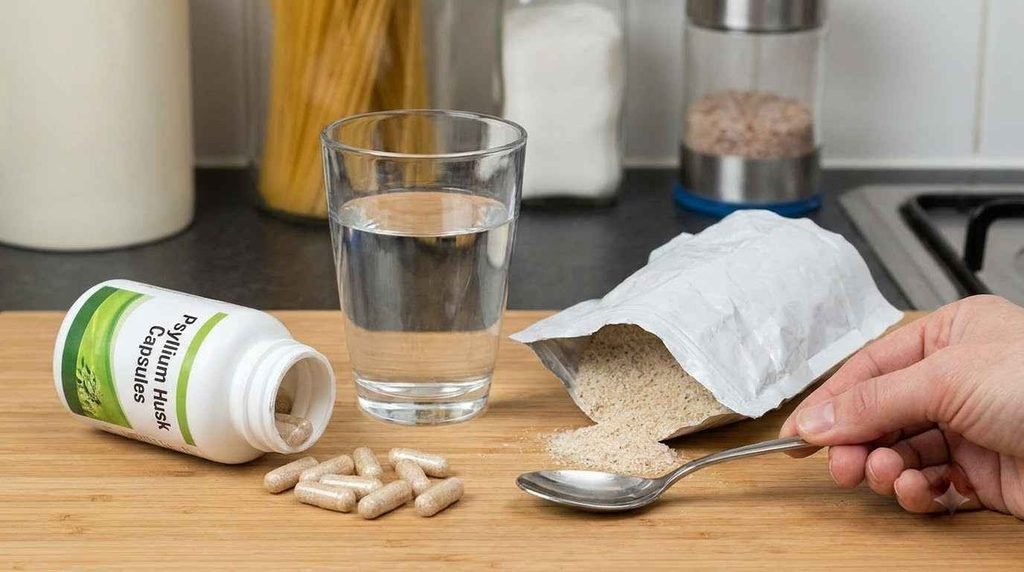
Psyllium Husk Capsules: Convenient but Not Always Practical
Psyllium husk capsules appeal to people who dislike the texture of the powder. They are portable, tasteless, and easy to measure. The trade-off is that each capsule holds only about half a gram, so a full dose can require many pills.
Take capsules one at a time, whole, with a full glass of water. Do not open them and swallow the powder dry. If you need a dose near 10 grams for cholesterol goals, powder is usually more realistic than capsules.
Capsules can still be a smart starting point. They let you try a small amount, learn how your gut reacts, and move up gradually. Some people use capsules while traveling and powder at home.
When to Take Psyllium Husk and How to Space It From Medicines
Timing is flexible, but consistency helps. Many people take it with breakfast or before dinner. Choose a time you will remember, then keep it steady.
Fiber can slow or reduce how well some medicines are absorbed. A widely used rule of thumb is to take other oral medicines at least two hours before or after it. Ask your pharmacist about your own list, especially for thyroid medicine, diabetes drugs, and anything with a narrow safety margin.
If you take medicine for blood sugar, remember that fiber can change how fast sugar enters the blood. Your doctor may want to monitor you after you start. Never change a prescribed dose on your own.
Fact 6: Side Effects and Who Should Be Careful
The most common side effects are digestive. They include gas, bloating, a feeling of fullness, and changes in bowel habits. These often ease as the body adapts, which is why a slow start matters.
Less common effects include nausea, cramping, and loose stools. These can happen if you take too much, too fast, or with too little water. Cutting back to your last comfortable dose usually helps.
Serious problems are rare but important. The big ones are choking, severe allergic reactions, and bowel blockage. The table below lists signs that should never be ignored.
Table 4: Side Effects and When to Get Medical Help
| Issue | What You May Notice | What to Do |
|---|---|---|
| Gas and bloating | Fullness, mild cramps, extra gas | Lower the dose, go slower, drink more water |
| Hard stools or no relief | No bowel movement after regular use | Stop and call a clinician if no movement within 3 days |
| Choking or throat blockage | Trouble swallowing or breathing after a dose | Seek emergency help right away |
| Allergic reaction | Hives, swelling, wheezing, rash | Stop use and get urgent medical care |
| Rectal bleeding | Blood on stool or paper | Stop use and see a doctor promptly |
| Ongoing symptoms | Constipation lasting over 7 days, or sudden bowel changes lasting over 2 weeks | Talk with a doctor before continuing |
People Who Should Talk to a Professional First
Some groups need extra care before using it. These include anyone with trouble swallowing, a narrowed bowel, or a history of bowel blockage. People with severe stomach pain, vomiting, or unexplained sudden changes in bowel habits should see a clinician first, because those can signal a medical problem that fiber will not fix.
Check the label if you have phenylketonuria, because some flavored powders contain phenylalanine. People on low-sodium or low-potassium diets should also check the facts panel. Pregnant or breastfeeding women, and anyone giving fiber to a child, should ask a clinician for the right amount.
Allergy is also possible, particularly in people who work with psyllium powder in factories or in people with other plant allergies. Stop at once if you notice hives, swelling, or breathing trouble. When it comes to psyllium husk supplement safety, a quick call to a pharmacist is cheap insurance.
Fact 7: The Psyllium Husk Cancer Warning, Explained
Now to the question that worries many readers: what is the psyllium husk cancer warning you sometimes see on labels? In most cases, it traces back to California’s Proposition 65, a state law that requires a warning if a product may expose people to listed chemicals above set limits. Heavy metals such as lead or arsenic are common examples.
This does not mean the fiber itself causes cancer. Plants grown in soil can pick up trace metals from the environment, and many foods and supplements carry similar Prop 65 notices. The warning is about possible contamination in a given batch or product, not about the fiber.
Writers who reviewed the topic say they found no clinical evidence that psyllium is uniquely prone to high metal levels. They also found no research showing it directly causes cancer. Some animal and fiber studies even hint at a protective effect, but that evidence is early and not proof for humans.
How to Respond to a Cancer Warning on a Label
A warning is a signal to be a smart shopper, not a reason to panic. Prop 65 limits are set very cautiously, often far below levels expected to cause harm. Still, you can lower your risk with a few simple steps.
- Choose brands that publish third-party lab tests for heavy metals.
- Look for batch-level certificates of analysis on the company website.
- Avoid unknown sellers with no testing information.
- Stick to the labeled serving and do not exceed it.
If you are pregnant, planning pregnancy, or feeding a young child, ask your clinician before choosing any fiber product. If a label has a warning and the company offers no test data, consider another brand. Transparency is a good sign of quality.
The bottom line on the psyllium husk cancer warning is balanced. It is a labeling rule about contaminants, not a finding that the fiber causes cancer. Good sourcing is the real safeguard.
Psyllium Husk Is Not a Cure
It is worth being very clear here. This fiber is not a cure for constipation, high cholesterol, diabetes, heart disease, irritable bowel syndrome, or cancer. It is a fiber supplement that can support certain goals when used with good habits.
Be careful with online claims about detoxing, melting belly fat, or “cleaning” your colon. Those phrases are marketing, not medicine. The body already has a liver, kidneys, and gut that do this work.
If you have a diagnosed condition, fiber should sit beside your care plan, not replace it. A statin, a diabetes drug, or a bowel treatment prescribed by your doctor still does its own job. Think of fiber as a helper on your team, not the star player.
Smart Ways to Get More Fiber From Food First
Before you reach for a scoop, look at your plate. Beans, lentils, chickpeas, oats, barley, apples, pears, berries, chia seeds, and vegetables all add fiber along with other nutrients. A small bean-based meal can deliver 7 to 10 grams of fiber with protein and minerals.
Add fiber slowly across a week or two, and pair each increase with extra water. Swap refined grains for whole grains, add a handful of beans to soups, and snack on fruit. These changes are cheap, filling, and good for your heart.
If you still fall short, a small serving of psyllium husk fiber can fill the gap. Many people find that a daily half-serving plus a better diet is enough. That balanced approach respects both your gut and your budget.
Frequently Asked Questions About Psyllium Husk
Is psyllium husk safe to take every day?
For most healthy adults, daily use at label amounts with plenty of water is considered safe. Long-term safety data are reassuring, but you should still check with a clinician if you take medicines or have a medical condition. Stop and seek help if you have choking, allergy signs, or bleeding.
How long does psyllium husk take to work?
For constipation, many people notice a change within a few days, though a fair trial is several weeks. For cholesterol, studies usually run 8 weeks or longer before changes are measured. Be patient and consistent.
Can psyllium husk help with weight loss?
Fiber can increase fullness, but the evidence for meaningful weight loss from this fiber alone is limited. It is not a weight-loss drug. A balanced diet and activity matter far more.
Can I take it with my other medicines?
Take other oral medicines at least two hours before or after your fiber dose, unless your pharmacist says otherwise. Fiber can change absorption for some drugs. Always ask about your own list.
Is psyllium husk powder better than capsules?
Powder usually delivers a full dose more easily and costs less. Capsules are better for taste and convenience but need many pills. Pick the form you will actually use every day.
Does it really lower cholesterol?
Yes, modestly. A large review found about a 13 mg/dL LDL drop at roughly 10 grams a day. It works best alongside a heart-healthy diet and any treatment your doctor recommends.
Final Thoughts: A Useful Tool, Not a Miracle
It earns its popularity. It is affordable, well studied, and helpful for constipation and for modest cholesterol improvement. It also comes with clear rules: start low, drink plenty of water, space it from medicines, and choose quality products.
Remember the main points. Aim for food first, build your dose slowly, and treat the psyllium husk cancer warning as a prompt to check sourcing, not as proof of harm. Most of all, keep your expectations realistic, because fiber supports health rather than curing disease.
If you are unsure where to begin, talk with your doctor, pharmacist, or a registered dietitian. They can match the right amount to your health, your medicines, and your goals. Small, steady steps usually beat dramatic fixes. Used wisely, psyllium husk can be one quiet habit that supports your gut and your heart. Used carelessly, even psyllium husk can cause avoidable trouble.
Medical Disclaimer
This article is for general education only and is not medical advice, diagnosis, or treatment. Dietary supplements are not intended to diagnose, treat, cure, or prevent any disease. Always speak with a qualified healthcare professional before starting a new supplement, especially if you are pregnant, breastfeeding, giving it to a child, managing a medical condition, or taking prescription medicines.
Sources Used
- NIH Office of Dietary Supplements fiber fact sheet for health professionals
- NIDDK constipation eating, diet, and nutrition guidance
- U.S. FDA labeling and supplement information (21 CFR 101.81 heart-health claim)
- Jovanovski E, et al. American Journal of Clinical Nutrition, 2018 (psyllium and LDL cholesterol meta-analysis)
- Pharmacy product guidance on psyllium dosing and safety
- Trend signal estimates from the nutrition trend tracker linked above