



You wake up with a stuffy nose, a scratchy throat, and a head that feels heavy. Is it a cold, or is it allergies? Sorting out allergy vs cold symptoms is harder than it sounds, because both can cause sneezing, a runny nose, and tiredness. Yet the cause, the timeline, and the best treatment are very different.
This guide breaks down allergy vs cold symptoms in plain language. You will see a clear allergy vs cold symptoms chart, a day-by-day timeline, and a full allergy vs cold symptoms comparison chart you can screenshot and save. We explain why itch points toward allergy, why fever points toward infection, and how mucus, cough, and sore throat can help you decide.
We also cover seasonal allergy vs cold symptoms, the most common mix-up in spring and fall. You will learn when antivirals matter (hint: they treat flu, not colds or allergies), which home care steps help, and which warning signs mean you should call a doctor.
Everything here is based on reputable health sources and written for everyday readers. Use it to understand allergy vs cold symptoms and make a smart plan. It is general education, not a diagnosis, so talk to a clinician if you are unsure or if symptoms are severe.
Why Allergy and Cold Symptoms Get Mixed Up
Both conditions affect the same parts of the body, which is why allergy vs cold symptoms overlap so much. They involve the nose, throat, eyes, and sometimes the chest. Both can leave you sneezing, stuffy, and worn out. That overlap is why so many people guess wrong about allergy vs cold symptoms.
The key difference lies in the cause. A cold comes from a virus. It spreads from person to person, runs its course, and fades. An allergy comes from your immune system reacting to something harmless, such as pollen, dust, mold, or pet dander. It is not contagious, and it lasts as long as you are exposed.
What Causes a Cold?
In the allergy vs cold symptoms debate, the cold side is simple: it is a mild infection of the nose and throat, usually caused by one of many viruses. The virus spreads through droplets when someone coughs or sneezes, or when you touch a contaminated surface and then touch your eyes, nose, or mouth. According to the CDC, colds usually peak within two to three days and often last less than a week.
What Causes an Allergy?
When you have an allergy, your body treats a harmless substance as a threat. It releases histamine and other chemicals. Histamine causes itching, swelling, sneezing, and a watery, runny nose. Common triggers include tree pollen, grass pollen, ragweed, dust mites, mold, and animal dander.
Why Getting It Right Matters
Guessing wrong has real costs. If you treat an allergy like a cold, you may keep suffering for weeks. If you treat a cold or flu like an allergy, you may miss the chance for proper care, or spread the illness to others at work or school. Good treatment starts with a correct guess, and the allergy vs cold symptoms differences below will help you make one.
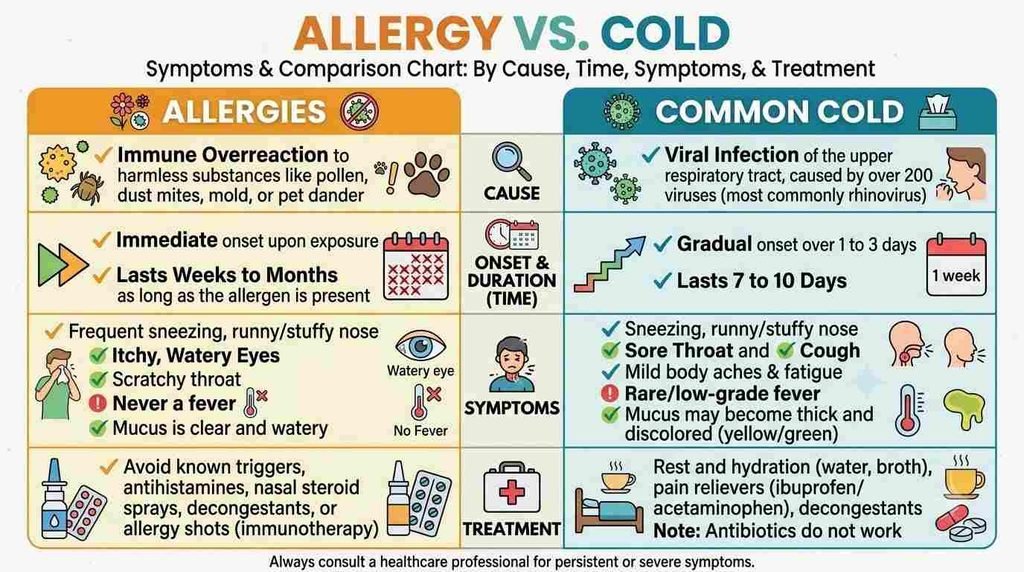
Allergy vs Cold Symptoms Chart: Quick Comparison
Here is an easy allergy vs cold symptoms chart to start with. Use it as a guide, not a diagnosis. Some symptoms overlap, and you may not match every row.
| Symptom | Allergy | Cold |
|---|---|---|
| Itchy eyes, nose, or throat | Common, often intense | Rare |
| Sneezing | Frequent, in bursts | Common early on |
| Runny nose | Thin, clear, and watery | Starts clear, may turn thick |
| Stuffy nose | Common | Common |
| Sore throat | Itchy or scratchy | Painful, worse when swallowing |
| Cough | Mild, from postnasal drip | Common |
| Fever | Almost never | Sometimes mild, usually low |
| Body aches | Not typical | Mild, sometimes |
| Tiredness | Mild to moderate | Mild to moderate |
| Watery, red eyes | Common | Uncommon |
| Contagious | No | Yes |
| How long it lasts | Weeks, while you are exposed | About a week, sometimes up to 10 days |
If you want a quick rule, remember this: itch and no fever point toward allergy. Fever, aches, and a short course point toward a cold.
Allergy vs Cold Symptoms Comparison Chart: By Time, Cause, and Treatment
The second allergy vs cold symptoms comparison chart looks beyond symptoms. It compares the cause, timing, and care.
| Feature | Allergy | Cold |
|---|---|---|
| Cause | Immune reaction to a trigger | Virus |
| Onset | Within minutes to hours of exposure | Gradual, over a day or two |
| Pattern | Repeats at the same time each year, or around certain places | Can happen any time, often after contact with a sick person |
| Duration | Lasts as long as exposure continues, even weeks | Improves in about 7 to 10 days |
| Spread to others | No | Yes |
| Best first steps | Avoid triggers, antihistamines, nasal sprays | Rest, fluids, saline, symptom relief |
| Antibiotics help? | No | No |
| Antivirals help? | No | No |
| See a doctor if | Symptoms last for weeks or disrupt sleep or work | Symptoms worsen, or fever, chest pain, or trouble breathing appear |

Timeline: How Long Do Allergy and Cold Symptoms Last?
Timing is often the best clue in allergy vs cold symptoms. A cold has a beginning, middle, and end. An allergy has no fixed end date until the trigger goes away.
Cold Timeline: Day by Day
| Day | What Usually Happens |
|---|---|
| Day 1 | A scratchy or sore throat, a tickle in the nose, and low energy |
| Day 2 to 3 | Runny nose, sneezing, congestion, mild headache. Symptoms usually peak. |
| Day 4 to 5 | Mucus may thicken and turn yellow or green. Cough may start. |
| Day 6 to 7 | Congestion starts to ease. Energy begins to return. |
| Day 8 to 10 | Mild leftover cough or stuffiness. Most people feel much better. |
The CDC notes that cold symptoms usually peak within two to three days. Colored mucus by itself does not prove you need antibiotics. It is common as a cold runs its course.
Allergy Timeline
Allergy symptoms can start within minutes of exposure. You might sneeze right after petting a cat or stepping into a field. They continue as long as the trigger is present. A few facts help you recognize the pattern:
- Pollen seasons often follow a cycle: trees first, then grasses, then ragweed in late summer and fall.
- Ragweed pollen usually runs from August to November.
- A rainy spring can feed mold growth and push symptoms into fall.
- Mild winters can cause plants to pollinate early.
- Some people have symptoms all year because of dust mites, pets, or indoor mold.
The Two-Week Rule
A simple rule of thumb: if your “cold” has lasted more than about 10 days to two weeks, with no fever and lots of itching, think allergy. If it starts suddenly with aches, chills, and tiredness, think infection. If you are unsure, a doctor can help.
Itch: The Biggest Clue in Allergy vs Cold Symptoms
If you take only one point from this article, make it this: itch is the signature of allergy.
Why Allergy Makes You Itch
Histamine, the chemical released during an allergic reaction, irritates nerve endings. This causes itching in the eyes, nose, roof of the mouth, throat, and sometimes the ears. Many people with allergy describe a strong urge to rub their eyes or scratch the back of their throat with their tongue.
Why Colds Rarely Itch
A cold causes swelling and soreness because your body is fighting an infection. The result is a painful or raw throat, not an itchy one. Itchy, watery eyes are unusual with a cold.
Itch Checklist
If you have three or more of these, allergy is more likely:
- Itchy or watery eyes
- Itchy nose that you rub often
- Itchy roof of the mouth or throat
- Itchy ears
- Repeated sneezing fits
- Symptoms that worsen outdoors, around pets, or while cleaning
Keep in mind that a person with allergies can also catch a cold, which blurs allergy vs cold symptoms even more. Both can happen together, which makes the picture messier. In that case, fever, body aches, or thick mucus can be the sign that an infection has joined the allergy.
Fever: Why It Points Away From Allergy in Allergy vs Cold Symptoms
Fever is the second big clue. It is your body’s response to an infection. Allergy is an immune reaction to a trigger, not an infection, so it rarely or never causes fever.
What Fever Looks Like With a Cold
Colds can cause a mild fever, especially in children. In older children and adults, it is usually low grade and brief. Many people have no fever at all. A fever that is high, lasts several days, or comes with severe aches is more likely to be flu, COVID-19, or another infection.
Fever and Allergy
If you feel hot, achy, and chilled, allergy is unlikely to be the whole story. Allergy can make you feel tired, foggy, or run down, but it should not raise your temperature. Take your temperature before you decide. A thermometer reading is much better than a guess.
When Fever Is a Warning Sign
Call a doctor if you or your child has:
- A fever that lasts more than three days
- A fever that goes away and then returns
- A very high fever, or one that does not respond to usual fever medicine
- Fever with a stiff neck, severe headache, confusion, or a new rash
- Fever in a newborn or a baby under three months, which always needs prompt medical advice
Mucus, Sneezing, Sore Throat, and Cough
Beyond itch and fever, smaller clues can help you sort out allergy vs cold symptoms.
Mucus
When checking allergy vs cold symptoms, mucus is a useful hint. Allergy mucus is usually thin, clear, and watery, like a faucet. A cold often starts with clear mucus and becomes thicker and yellow or green as the days go by. Color change alone does not prove a bacterial infection.
Sneezing
Sneezing happens in both. In allergy, it often comes in repeated bursts and is linked to a trigger such as dust, pollen, or a pet. In a cold, sneezing is usually strongest in the first few days.
Sore Throat
An allergic sore throat tends to feel itchy or scratchy, often from postnasal drip. A cold sore throat is more painful and may hurt when you swallow. If your throat is very sore with swollen glands and fever, ask a doctor about strep throat.
Cough
Colds often bring a cough, which can last for a while after other symptoms improve. Allergy causes a cough less often, and it usually comes from mucus dripping down the back of the throat. A cough with wheezing, chest tightness, or shortness of breath may signal asthma and needs medical attention.
Body Aches and Tiredness
Strong body aches point to infection, especially flu. Allergy can leave you tired and mentally cloudy, mostly because of poor sleep and ongoing inflammation. But you can usually still function.
Seasonal Allergy vs Cold Symptoms: Spring and Fall Mix-Ups
Many people ask about seasonal allergy vs cold symptoms because both peak when the weather changes. Fall brings a special problem: cold and flu season overlaps with ragweed and mold season.
The Seasonal Pattern
Allergy symptoms tend to return at the same time each year. In many parts of the United States, tree pollen arrives in early spring, followed by grass pollen and then ragweed in late summer and fall. If you sneeze every April or every September, allergy is likely.
What to Watch For
When you compare seasonal allergy vs cold symptoms, ask yourself:
- Have I had this same pattern in past years?
- Do symptoms get worse outside or on windy days?
- Do my eyes itch?
- Am I free of fever and body aches?
- Is no one around me sick?
Yes to most of these points toward allergy. A different pattern, such as sudden onset after contact with a sick person, points toward a cold or another virus.
Back-to-School and Work Spikes
Children often bring home colds in September, just when ragweed peaks. That overlap makes seasonal allergy vs cold symptoms especially confusing for families. A child with a runny nose may have either one, or both at once. A child with a fever, though, is likely fighting an infection.
Practical Tip: Start Early
If your allergies come back every year, many allergists suggest starting medicine about two weeks before your symptoms usually begin. Allergy specialists also recommend tracking pollen counts, keeping windows closed, and showering after time outdoors, which can reduce exposure without any medicine.
Is It Allergy, Cold, Flu, COVID-19, or Sinus Infection?
Sometimes the choice is not just allergy vs cold. Here is how other common illnesses compare.
| Feature | Allergy | Cold | Flu | COVID-19 | Sinus Infection |
|---|---|---|---|---|---|
| Fever | No | Mild, sometimes | Common, often high | Common, but not always | Possible |
| Body aches | No | Mild | Common and strong | Common | Mild |
| Itchy eyes | Yes | No | No | No | No |
| Onset | Fast after exposure | Gradual | Sudden | Variable | After a cold or allergy flare |
| Loss of taste or smell | Rare | Mild, if any | Uncommon | Can happen | Can happen |
| Facial pain or pressure | Mild | Mild | Mild | Mild | Common and stronger |
| Contagious | No | Yes | Yes | Yes | Usually not by itself |
If you have cold-like symptoms and suspect flu or COVID-19, testing is a smart move. The CDC advises testing especially for people at higher risk of severe illness. Results can guide care and protect people around you.
Allergy Can Lead to Sinus Trouble
Long-lasting allergy swelling can block the sinuses and trap mucus. This can lead to sinus pressure or infection. If you have thick colored mucus, facial pain, and symptoms for more than 10 days, see a doctor.
When Antivirals Matter
This is where many readers get confused, so let’s be clear. Antivirals do not treat allergies, and they do not treat the common cold. They are used for specific viral infections, mainly influenza (flu) and COVID-19.
What the CDC Says About Flu Antivirals
According to the CDC, flu antivirals are prescription medicines that treat flu only. They can lessen symptoms and shorten the illness by about a day. They work best when started within one to two days of symptoms. COVID-19 antivirals are not approved for flu, and antibiotics do not treat flu.
Who Should Consider Antivirals?
The CDC advises flu antiviral treatment for:
- People who are hospitalized with flu
- People who are very sick with flu, even if not hospitalized
- People at higher risk of serious complications who get flu symptoms
Higher-risk groups include pregnant women, people with asthma or chronic lung disease, people with diabetes, people with heart disease, and others at risk because of age or health conditions. If you are in one of these groups and develop sudden fever, aches, and cough during flu season, contact your doctor promptly. Do not wait to see if it is “just allergies.”
What Antivirals Cannot Do
- They do not cure colds.
- They do not stop allergy symptoms.
- They are not a substitute for the annual flu vaccine.
- They should not be taken without a clinician’s advice. Only a doctor can decide whether you need one and which type is right for you.
How This Connects to Allergy vs Cold Symptoms
If your illness began suddenly with fever, chills, strong aches, and cough, you may be dealing with flu, not a cold or allergy. That is the moment when time matters. In this case, the question is not allergy vs cold symptoms but whether you need testing and early treatment.
Treatment: What Helps Allergy, and What Helps a Cold?
Because the causes differ, the treatments for allergy vs cold symptoms differ too. Using the wrong remedy wastes money and time, so match the care to your allergy vs cold symptoms.
For Allergy
- Avoid triggers. Keep windows closed during high-pollen days, wash bedding in hot water, and shower after outdoor activity.
- Antihistamines. Block histamine and ease sneezing, itching, and runny nose. Newer non-drowsy types are available without a prescription.
- Nasal steroid sprays. Reduce swelling inside the nose. Use them daily for best results.
- Saline rinses. Wash out pollen and mucus. Use distilled, boiled and cooled, or properly filtered water.
- Eye drops. Antihistamine drops can soothe itchy eyes.
- Immunotherapy. Allergy shots or tablets help the body build tolerance over time. They are an option when symptoms are severe or long-lasting.
For a readable overview of the condition and its treatment, see this explanation of hay fever, its symptoms, and its treatment options.
For a Cold
There is no cure for a cold, and antibiotics do not work on viruses. Care focuses on comfort:
- Rest. Your body heals best when you sleep enough.
- Fluids. Water, broth, and warm drinks help with hydration and sore throat.
- Saline spray or rinse. Eases a blocked nose.
- Humidifier or steamy shower. Adds moisture to the air.
- Pain or fever relievers. Use as directed on the label. Never give aspirin to children.
- Throat soothers. Warm liquids or lozenges for older children and adults.
Mistakes to Avoid
- Taking an antibiotic for a cold. It will not help and may cause side effects.
- Using decongestant nose sprays for more than a few days, which can cause rebound congestion.
- Taking several multi-symptom products at once, which can lead to doubling up on the same ingredient.
- Ignoring symptoms that last longer than expected.
- Going to work or school with a fever.
Children, Pregnancy, and Older Adults
Medicine choices differ for babies, children, pregnant adults, and older adults. Many cough and cold products are not safe for young children. Always ask a pediatrician, doctor, or pharmacist before giving or taking a medicine in these groups.
Home Habits That Help Both
Some steps help whether your allergy vs cold symptoms point to allergy, a cold, or both.
- Drink plenty of water.
- Sleep with your head slightly raised to ease congestion.
- Keep your home clean and dust-free.
- Wash your hands often to stop the spread of colds.
- Use a clean humidifier, and clean it as directed.
- Avoid smoke and strong scents.
- Wipe down phones and doorknobs when someone at home is sick.
How Doctors Sort Out Allergy vs Cold Symptoms
If you are still stuck, a clinician can look at the full picture. Understanding allergy vs cold symptoms in a medical visit usually involves a few simple steps.
Questions Your Doctor May Ask
- When did your symptoms start, and how fast did they build?
- Do they return in the same season or in the same place?
- Do you have itching, fever, or body aches?
- Does anyone at home, school, or work have the same illness?
- Do you have asthma, eczema, or past allergy problems?
A short symptom diary can make this visit far more useful. Write down the date, your temperature, which symptoms you have, and what you were doing or where you were when they got worse.
Exams and Tests
The doctor may check your nose, throat, ears, eyes, and lungs. If infection is possible, a rapid test for flu, COVID-19, or strep may be used. If allergy is likely, an allergist can do a skin prick test or a blood test to find out which triggers affect you. Good testing turns a guess about allergy vs cold symptoms into a clear answer.
Common Myths About Allergy and Cold Symptoms
Myths can lead people to the wrong treatment. Here are a few to clear up.
- Myth: Green mucus always means an infection that needs antibiotics. Mucus color changes during many colds and does not prove a bacterial infection.
- Myth: Cold weather gives you a cold. Colds come from viruses. Cold weather may keep people indoors, where viruses spread more easily.
- Myth: Allergies are just a mild annoyance. For some people they cause poor sleep, missed work, and worse asthma.
- Myth: You can only get allergies as a child. Allergy can start at any age, so a new pattern in adulthood is worth checking.
- Myth: If it lasts a week, it must be a cold. A long-lasting runny nose with itching may be allergy, even if it started like a cold. Remember that allergy vs cold symptoms are separated best by timing, itch, and fever together, not by one sign alone.

When to See a Doctor or Seek Urgent Care
Most colds and mild allergies can be handled at home. But some signs mean you need help sooner.
Call a Doctor If
- Symptoms last more than about 10 days to two weeks without improvement
- Symptoms improve and then suddenly get worse
- You have thick colored mucus with facial pain and pressure for more than a week
- Your symptoms keep you from sleeping, working, or going to school
- You have asthma and notice more coughing or wheezing
- You think you might have flu or COVID-19, especially if you are at higher risk
- Over-the-counter medicines are not controlling your allergy symptoms
Seek Urgent or Emergency Care If
- You have trouble breathing, or wheezing that does not ease with a rescue inhaler
- Your lips, tongue, or throat swell
- You have chest pain, confusion, or a bluish color on the lips or face
- You have a very high fever, a stiff neck, or a severe headache
- A baby under three months has a fever
Never ignore breathing problems, thinking they are “just allergies.” Severe asthma attacks, flu complications, and pneumonia can all begin with symptoms that look like a cold.
Real-Life Examples
Stories can make the allergy vs cold symptoms differences easier to see. These are simple, everyday examples, not medical cases.
Example 1: The September sneezer. Maya sneezes in long bursts every September. Her eyes itch, her nose runs clear, and she has no fever. This has happened for three years in a row. The pattern points to ragweed allergy, and an allergist can confirm it.
Example 2: The office cold. Daniel’s coworker was sniffling all week. Two days later, Daniel has a sore throat, a runny nose, and mild tiredness. By day four, his mucus is thick. By day eight, he feels better. This is a typical cold.
Example 3: The sudden crash. Priya wakes up with a fever, chills, strong body aches, and a dry cough. It came on within hours. This looks more like flu than a cold or allergy. Since she has asthma, she should call her doctor promptly about testing and treatment.
Example 4: Both at once. Sam has seasonal allergy but also picks up a cold from his child. He now has itchy eyes plus a sore throat and thick mucus. A person can have both. Treat the allergy and rest for the cold.
A Simple Five-Question Test
Not sure what you have? Ask yourself these questions:
- Do my eyes and nose itch? If yes, think allergy.
- Do I have a fever or body aches? If yes, think infection.
- Did it start suddenly after contact with someone sick? If yes, think cold, flu, or COVID-19.
- Does it return around the same time every year? If yes, think seasonal allergy.
- Has it lasted longer than 10 to 14 days? If yes, think allergy or sinus problem, and see a doctor.
This test is a guide to allergy vs cold symptoms, not a diagnosis. When in doubt, ask a professional.
How to Prevent Allergy and Colds
Preventing Allergy Flare-Ups
- Check daily pollen counts and plan outdoor time when levels are lower
- Keep windows closed on high-pollen days
- Wash bedding weekly in hot water
- Use a HEPA filter in the bedroom
- Shower and change clothes after being outdoors
- Wash pets regularly and keep them out of the bedroom if pet dander is a trigger
- Treat early if your season is predictable
Preventing Colds
- Wash your hands with soap and water often
- Avoid touching your face
- Stay home when you are sick
- Cover coughs and sneezes
- Clean shared surfaces
- Get enough sleep, eat well, and stay active
Preventing Flu and COVID-19
An annual flu vaccine is recommended for everyone six months and older. Staying current with other recommended vaccines and testing early when symptoms start can also help protect you and people around you.
Frequently Asked Questions
What is the main difference in allergy vs cold symptoms?
The main difference is the cause. A cold is a viral infection that spreads, causes mild aches or low fever, and usually improves in about a week. An allergy is an immune reaction to a trigger. It causes itching, no fever, and lasts as long as the trigger is present. When people ask about allergy vs cold symptoms differences, itch and fever are the quickest clues.
Can allergies cause a fever?
No. Allergy rarely or never causes fever. If you have a fever, think about a cold, flu, COVID-19, or another infection.
How can I tell seasonal allergy vs cold symptoms in fall?
Look at the pattern. Seasonal allergy vs cold symptoms are easier to separate if you ask whether symptoms come back every year, whether your eyes itch, and whether anyone around you is sick. Ragweed and mold often peak in fall, just as colds and flu start to spread.
Is there an allergy vs cold symptoms chart I can use?
Yes. The allergy vs cold symptoms chart earlier in this article gives a quick view. It compares itch, sneezing, mucus, sore throat, cough, fever, aches, contagiousness, and timing. For a broader view, use the allergy vs cold symptoms comparison chart, which also covers cause, onset, pattern, and care.
Do antivirals work for colds or allergies?
No. Antivirals do not treat colds or allergies. They are prescription medicines used for flu, and some COVID-19 antivirals exist for COVID-19. Flu antivirals work best when started early, ideally within one to two days of symptoms, and a clinician decides who needs them.
Can I have an allergy and a cold at the same time?
Yes. Allergy can inflame the nose and make it easier to feel sick when a cold virus arrives. If you notice fever, body aches, or thick mucus on top of itching, a cold or other infection may have joined the allergy.
Conclusion
Telling allergy vs cold symptoms apart comes down to a few clear clues. Itch, no fever, clear mucus, and a long, seasonal pattern point to allergy. Fever, aches, thick mucus, and a short course of about a week point to a cold. Sudden high fever and strong aches may signal flu, and that is when antivirals matter, especially for people at higher risk.
Use the allergy vs cold symptoms chart, the timeline, and the five-question test as a quick guide. Treat allergy with trigger control and the right medicines, and treat a cold with rest, fluids, and comfort care. Watch for warning signs, and do not hesitate to call a doctor when something does not feel right. With a little knowledge, you can stop guessing and start feeling better.
Medical Disclaimer
This article is for general education only. It is not medical advice and does not replace care from a doctor, allergist, or pharmacist. If you have trouble breathing, swelling of the lips or throat, a very high fever, or any symptom that worries you, seek emergency care right away. Always talk to a qualified clinician before starting, stopping, or changing any medicine.